Two centuries of grain, water and stone in the village of Delta — the oldest surviving pre-1812 stone flour mill in the Province of Ontario.
For more than two hundred years, the Old Stone Mill has stood beside the millpond of Upper Beverley Lake, its limestone walls grinding the wheat of the surrounding countryside into flour. This is its story — gathered from ledgers, censuses, photographs and recollection.
The Old Stone Mill is a survivor. Built in 1810–11 by William Jones and Ira Schofield in the years before the War of 1812, it has milled grain for the farmers of the upper Rideau watershed under the names of a half-dozen owners, passed through periods of prosperity and near-ruin, and emerged — restored, interpreted, and once again grinding flour — as the oldest pre-1812 stone gristmill still standing in the Province of Ontario.
What follows is an overview of six chapters of the mill's life — its founding, its village, its milling history, its preservation, its present, and a timeline of key events. The research underpinning this account was conducted by Ken W. Watson and is based on the Delta Mill Society's historical archive.
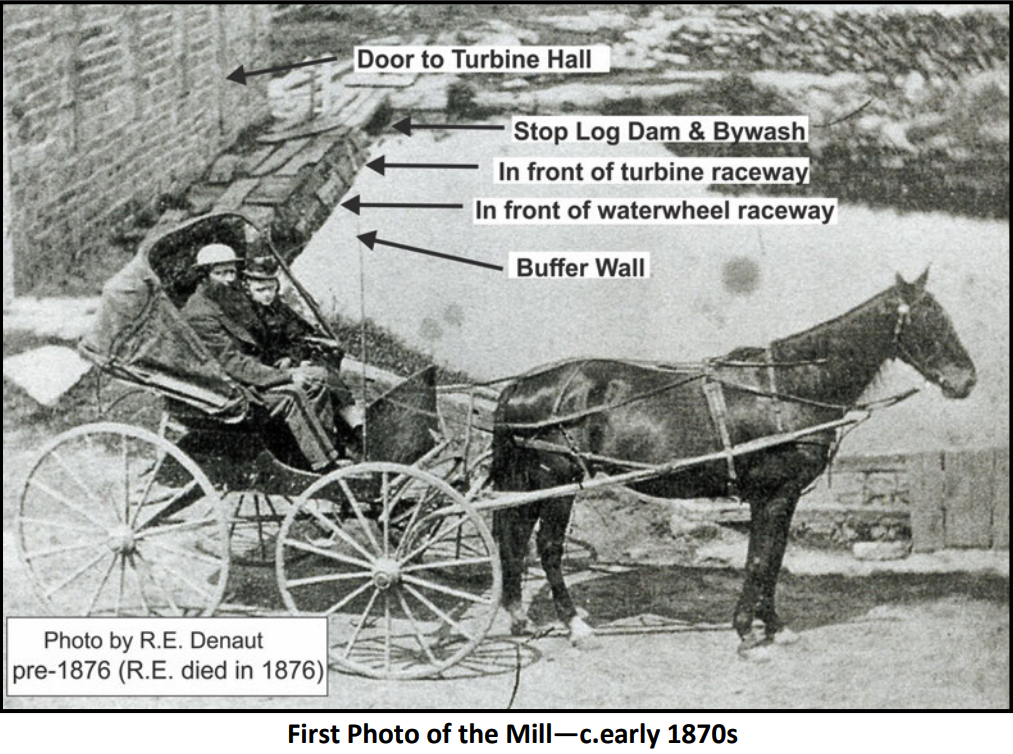
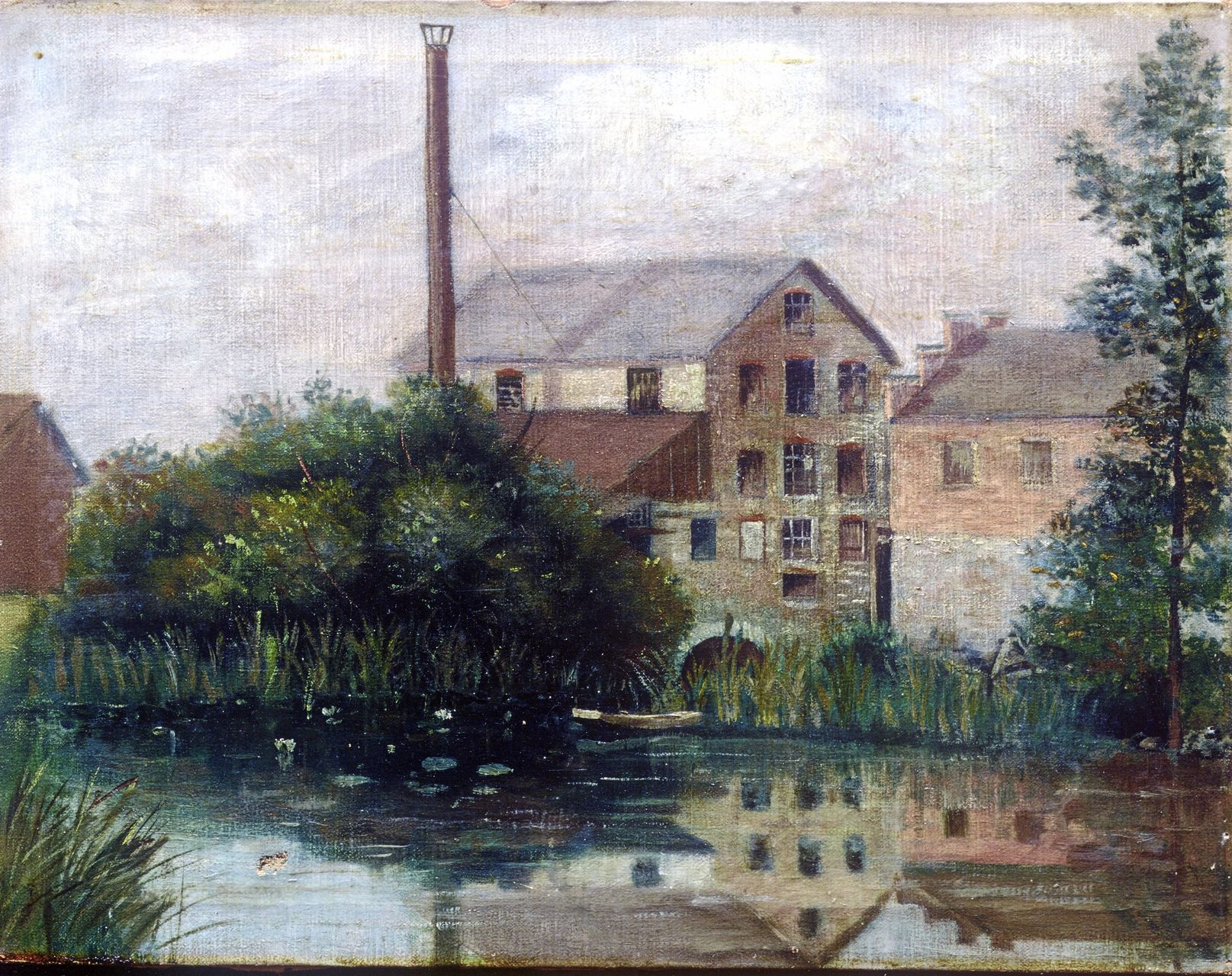
Photo by R. E. Denaut. The earliest known image of the Old Stone Mill — the turbine hall door, stop-log dam and bywash are all visible.
Construction of the mill began in the spring of 1810. Its organizers, William Jones and Ira Schofield, hired a skilled millwright whose name is not known to us — the structure raised in dressed local limestone would be described within a decade as "unquestionably the best building of the kind in Upper Canada."
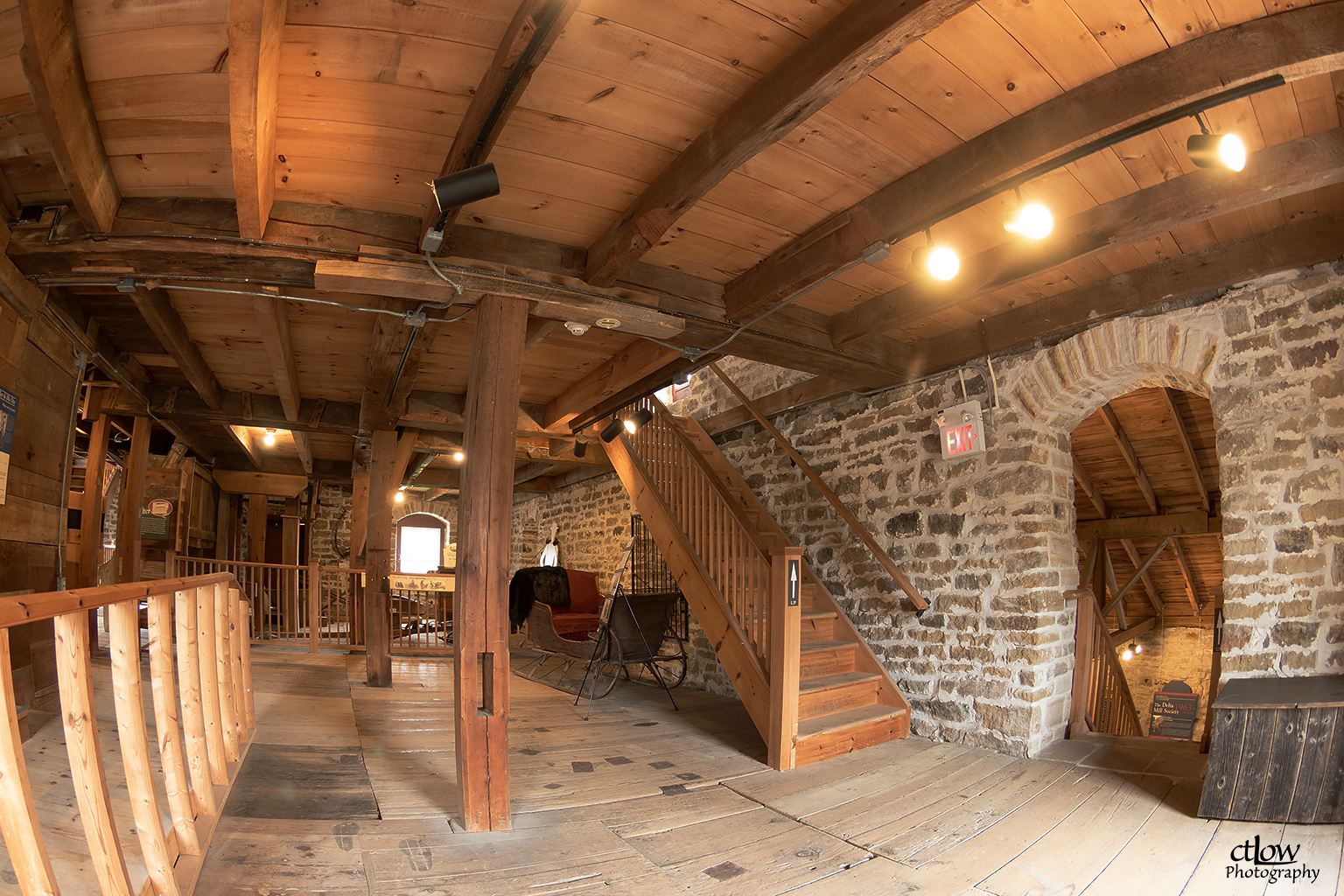
The structure is a textbook example of an Oliver Evans automatic mill, designed so that grain, once loaded, would be lifted, cleaned, milled, sifted, and barrelled by an integrated system of elevators, conveyors, and hoppers — with minimal manual handling. The walls were laid in dressed limestone, quarried and blasted from bedrock on site. The mill was built specifically as a merchant mill: buying grain from local farmers and producing flour for sale.
The hamlet Jones and Schofield built for — first called Stone Mills, later Beverley, finally Delta — was scarcely twenty years old. Within a generation the mill had passed through several proprietors, eventually coming under the ownership of Walter Henderson Denaut, a wealthy Delta merchant whose family name still marks the finest house in the village.
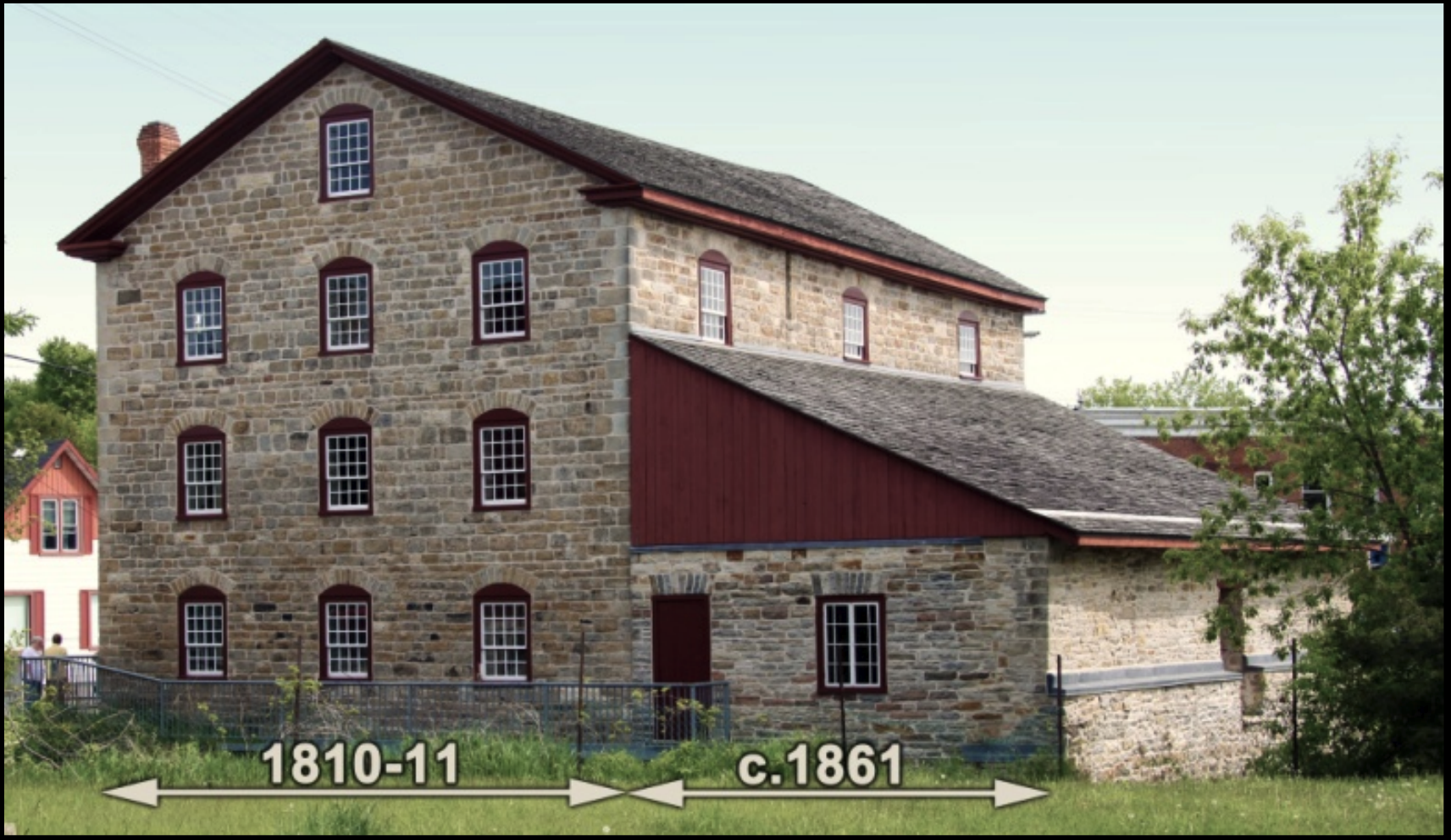
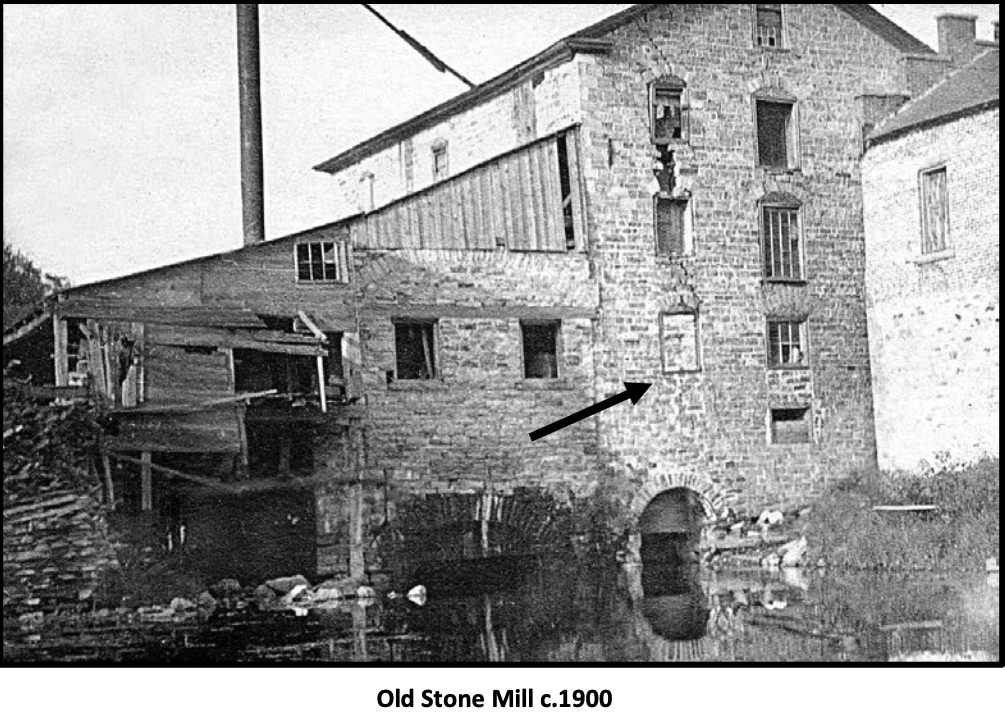
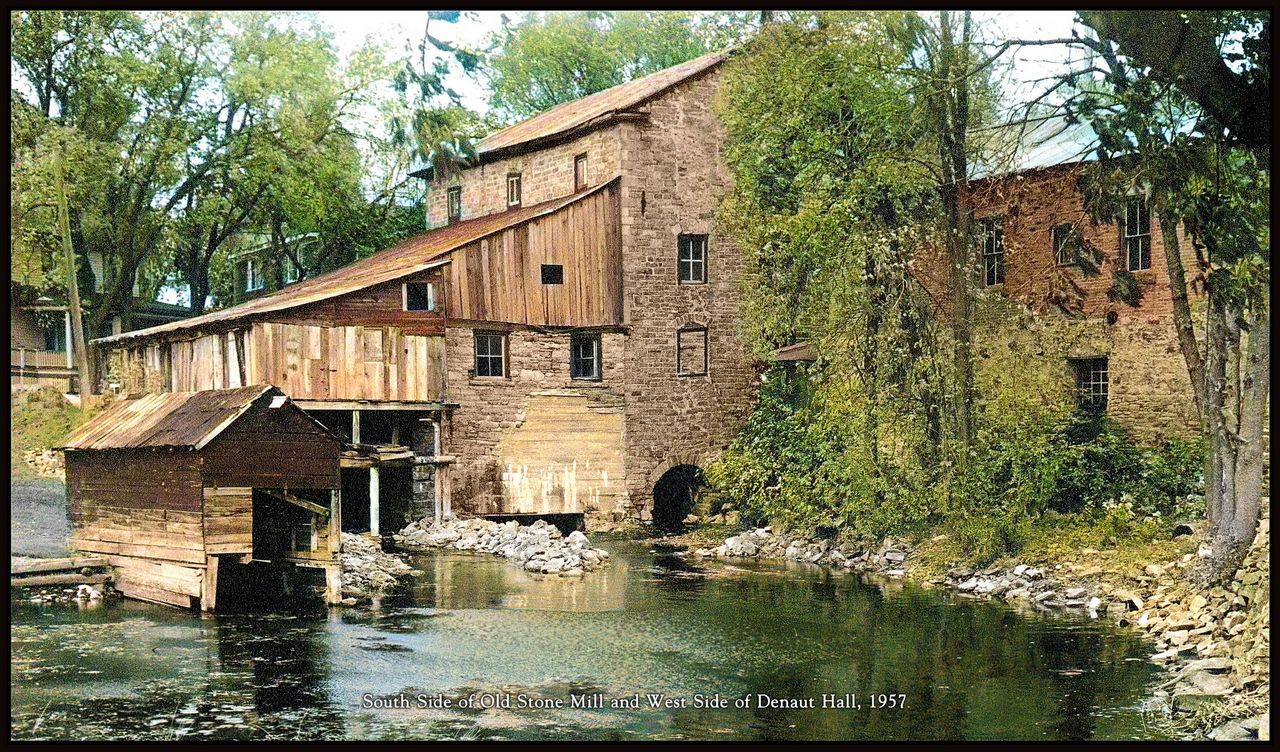
The original 1810–11 limestone block (left) and the c.1861 turbine hall extension (right) — both sections visible in the standing structure today.
"W. H. Denaut, Merchant. One grist mill, unfinished or under repair. One run of stones in operation by water power. Will cost when finished, £2,600."
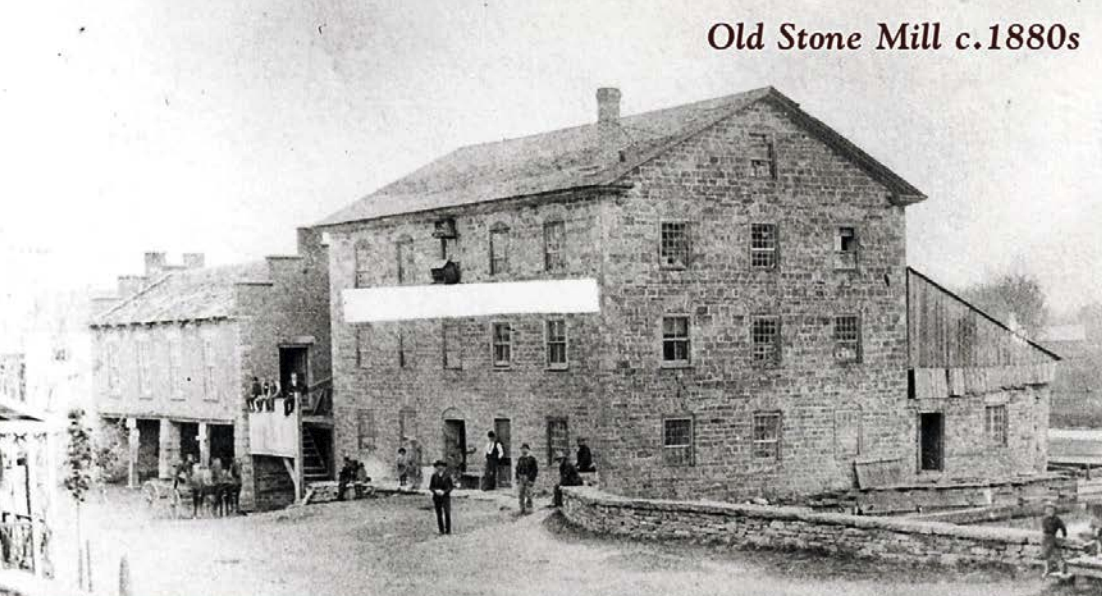
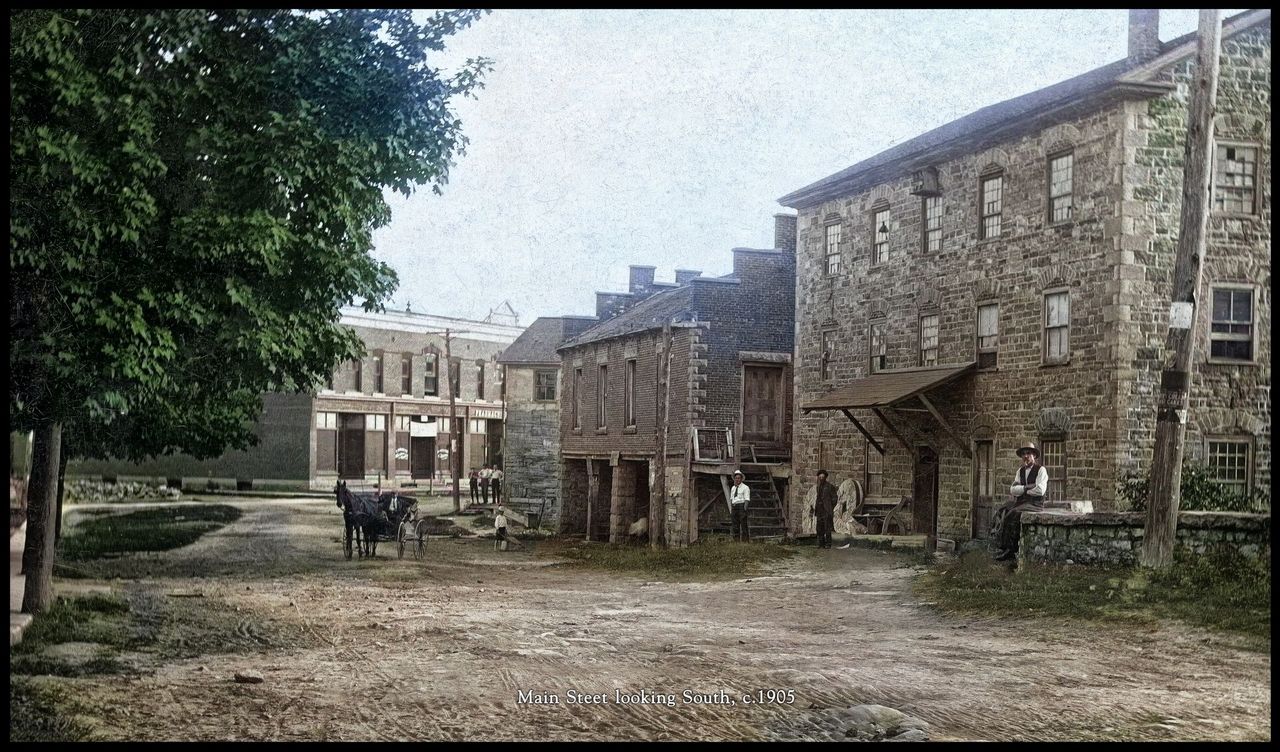
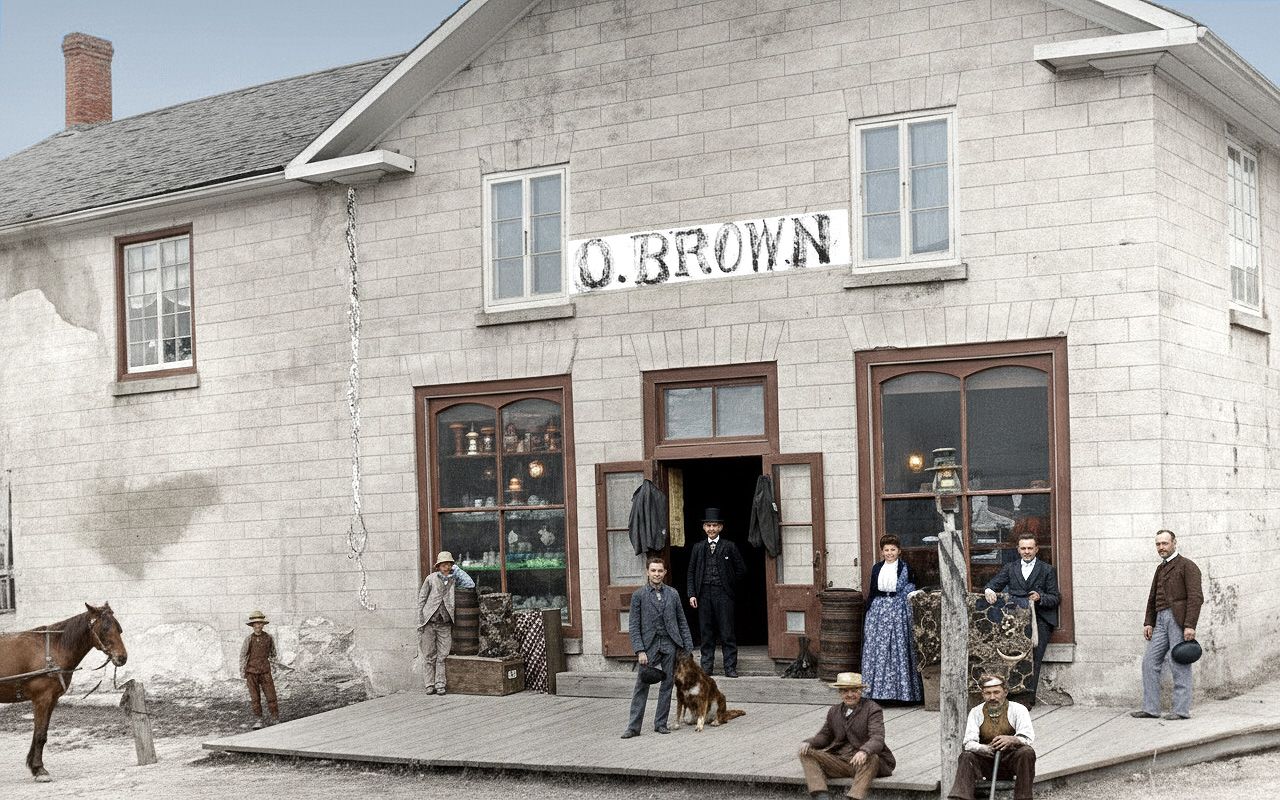
The Old Stone Mill at right, horse and wagon at rest on the unpaved street — the commercial heart of Delta in its prime as a milling village.
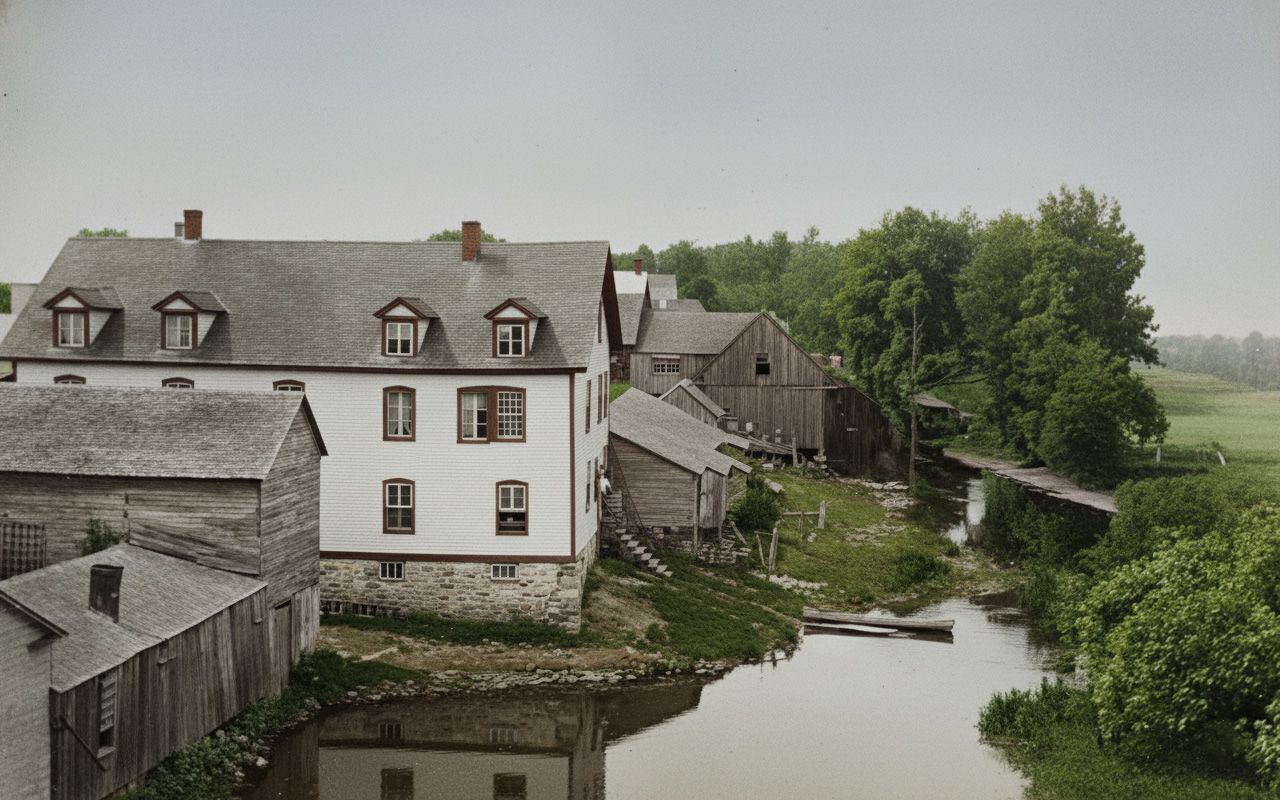
The Grand Central Hotel (also known as the Beverley House Hotel) and the mill stream flowing past. The hotel anchored the village's commercial district, adjacent to the mill and millpond.
Before there was a mill there was a road, and before the road, a portage. The narrow neck of land between Upper and Lower Beverley Lakes had been used as a crossing place since long before European arrival, and the first settlers — most of them Loyalists displaced by the American Revolution — established a hamlet here in the closing years of the eighteenth century, christening it Stone Mills for the buildings that soon defined it.
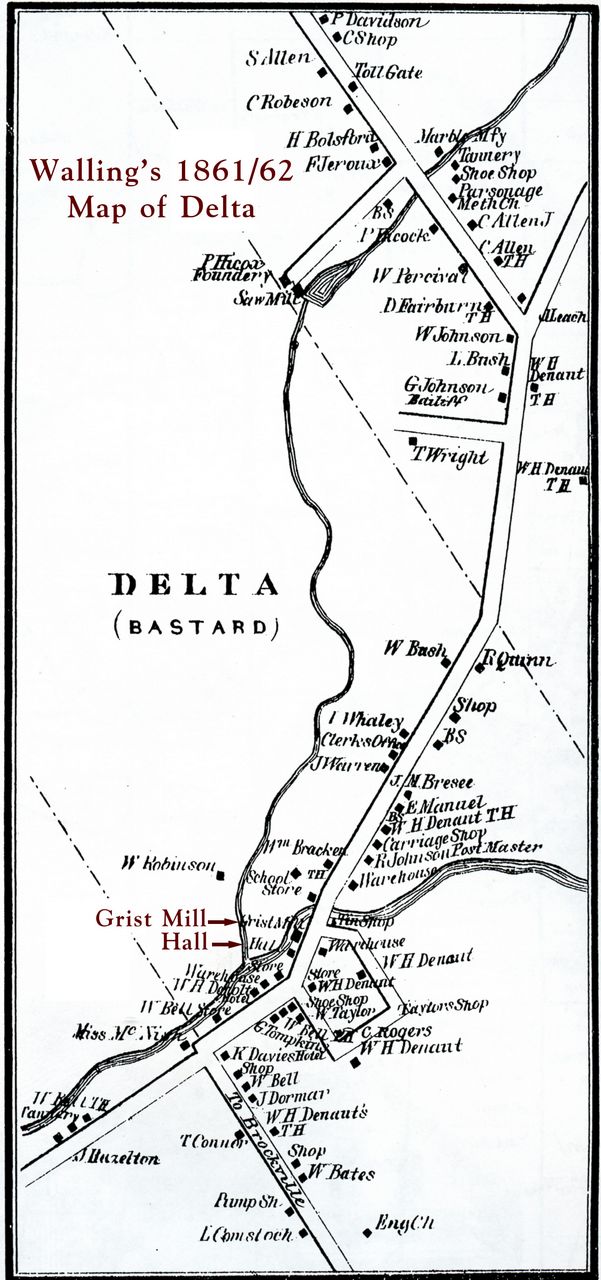
By the eighteen-thirties the village had a tavern, a forge, a tannery, a school, two churches, and a half-dozen shops radiating from the millyard. It was the agricultural and commercial centre of the surrounding township, and would remain so until the railway, in the late nineteenth century, pulled the centre of gravity elsewhere. Renamed Delta in 1857 to avoid confusion with another Stone Mills in the colony, it remains today the oldest community in the Township of Rideau Lakes.
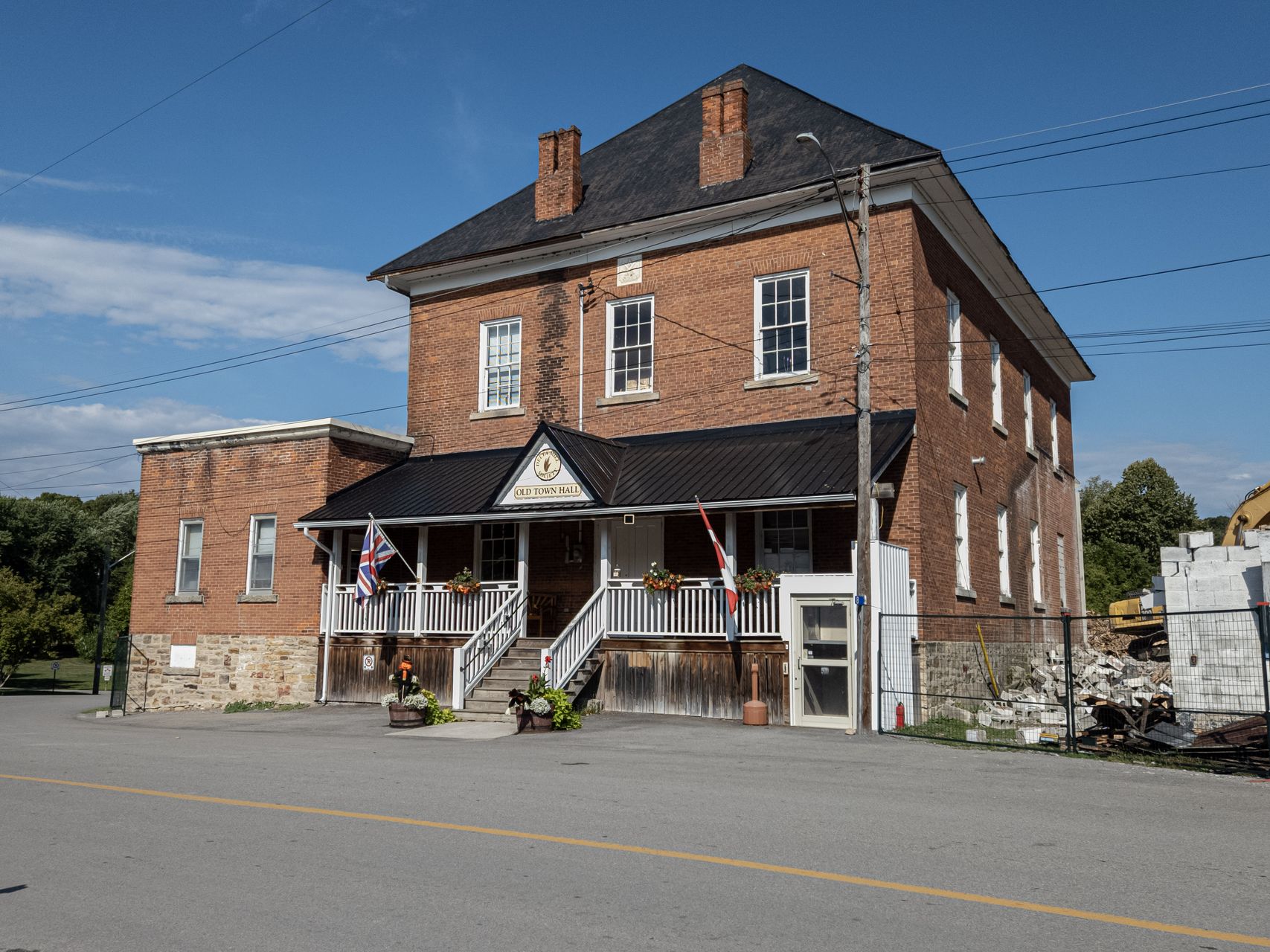
The mill, the Old Town Hall (built 1879–1880, acquired by the Delta Mill Society in 1994), the Denaut Mansion and the Blacksmith Shop together form a coherent ensemble of the village's first century — a streetscape, remarkably preserved, of the Upper Canadian agrarian economy.
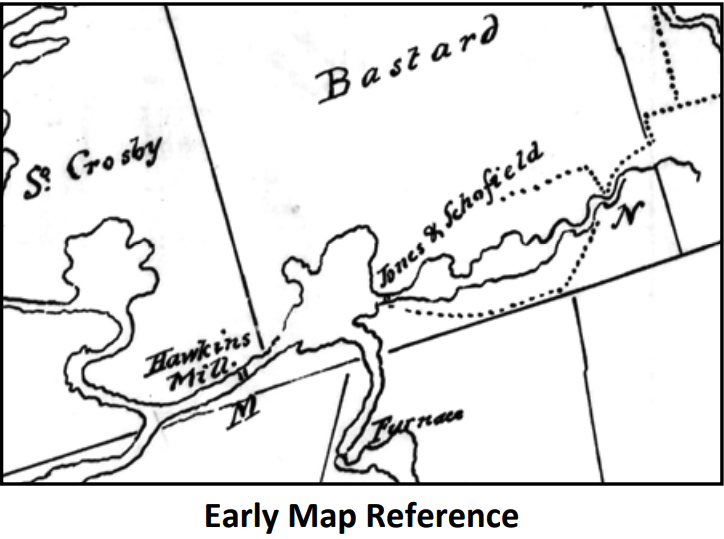
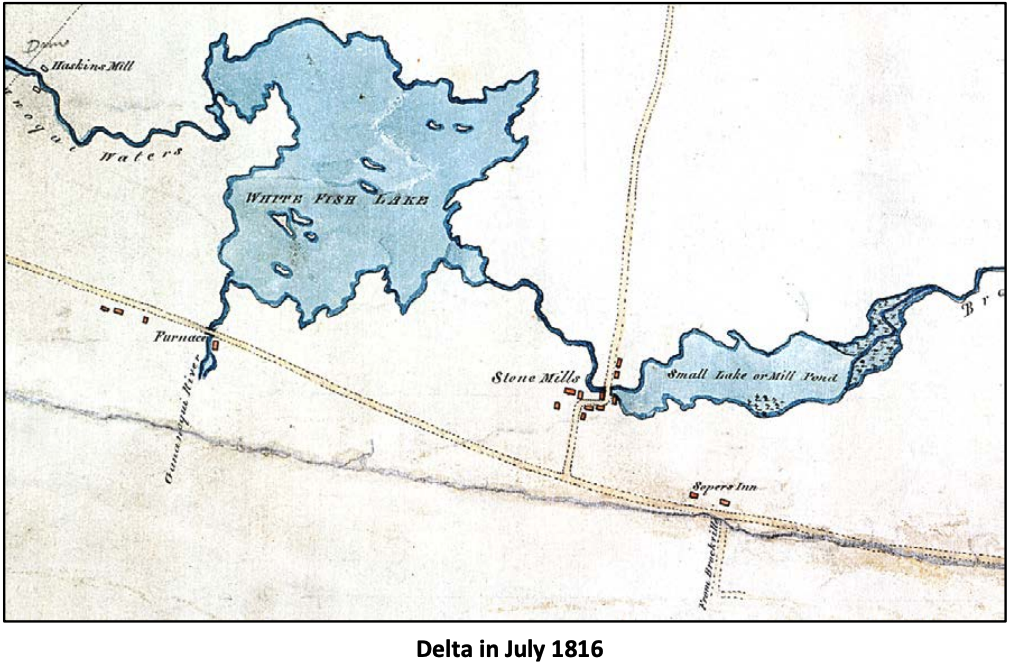
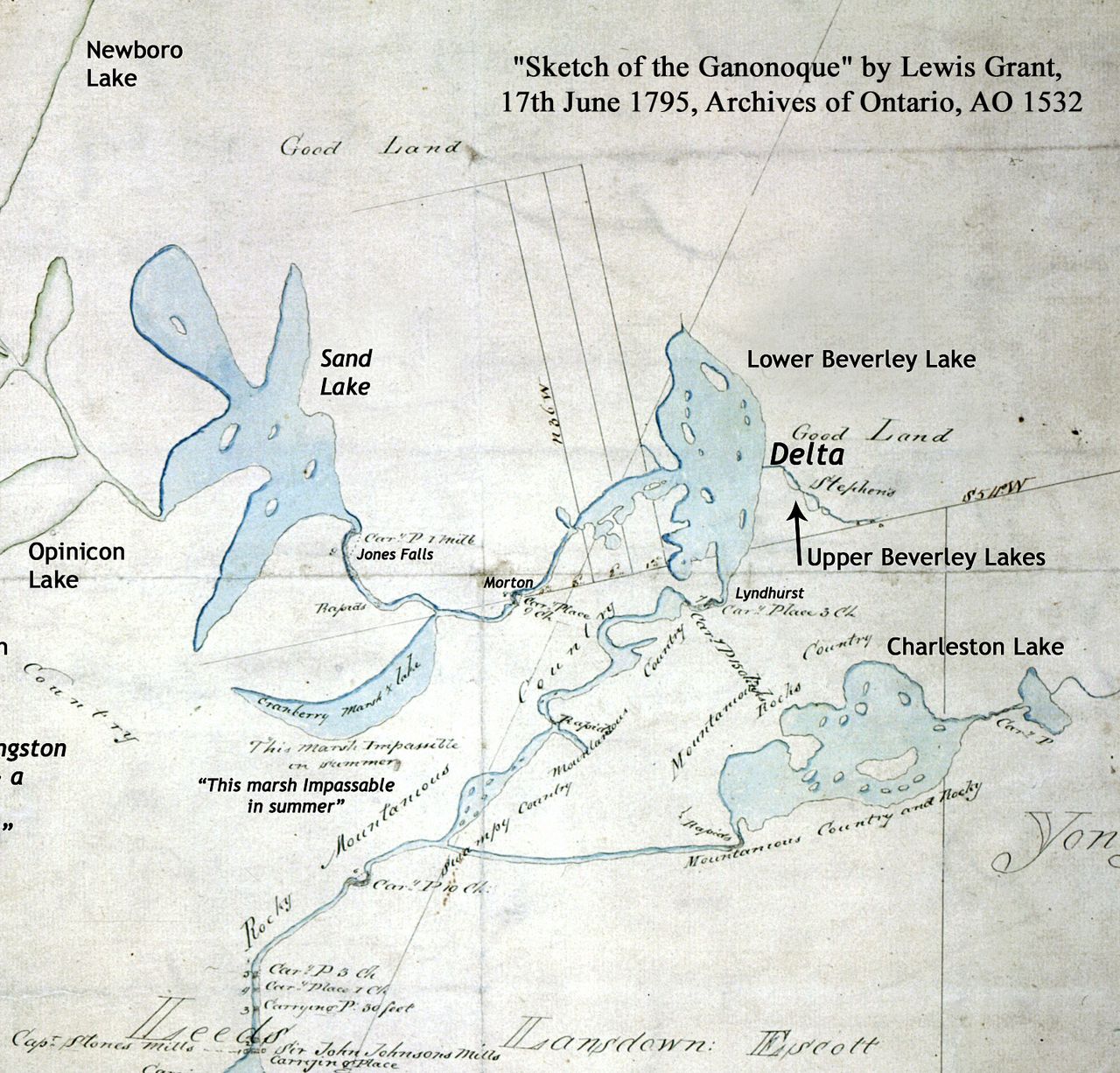
The village of Stone Mills appears on official survey maps as early as 1815 — just five years after construction of the Old Stone Mill began. These early maps document the mill's position within the settlement, its relationship to the surrounding water system, and the other water-powered operations that defined the upper Rideau watershed in the years following the War of 1812.
An 1815 survey of Bastard Township identifies the operation by name: "Jones and Schofield," the grist mill's proprietors. The same survey records "Hawkins Mill" at White Fish Falls (present-day Morton) and notes the remains of the former ironworks at Lyndhurst — documenting the interconnected industrial character of the Rideau Lakes in this period.
By 1816, a survey map drawn by Joshua Jebb, RE, for the British military recorded the full extent of buildings then standing at Stone Mills. The mill, its millrace channel, and the outflow from Upper Beverley Lake are traceable on Jebb's survey. A second survey by J. Walpole, RE, dated June 22, 1828, records the same settlement under the name "Beverley," with approximately thirty houses — a measure of the commercial growth the mill had supported in its first two decades. Both maps are held at Library and Archives Canada.
The earliest cartographic record of the Old Stone Mill, identified under the names of its founders. The map also shows Haskins sawmill at White Fish Falls and the former ironworks ruins at Lyndhurst. Library and Archives Canada.
Drawn for the British military six years after the mill's construction, the Jebb survey provides the earliest detailed plan of the built environment at Stone Mills. Library and Archives Canada, NMC 21941.
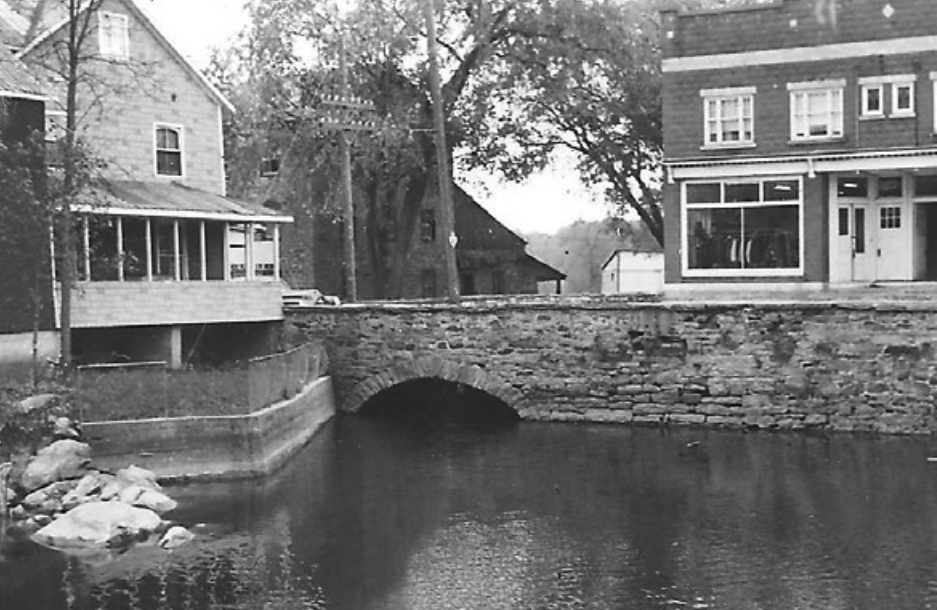
The limestone road bridge that crossed the mill channel adjacent to the Old Stone Mill. Built c. 1870, it was demolished in 1963 by the Ontario Ministry of Natural Resources and replaced with the current concrete bridge.
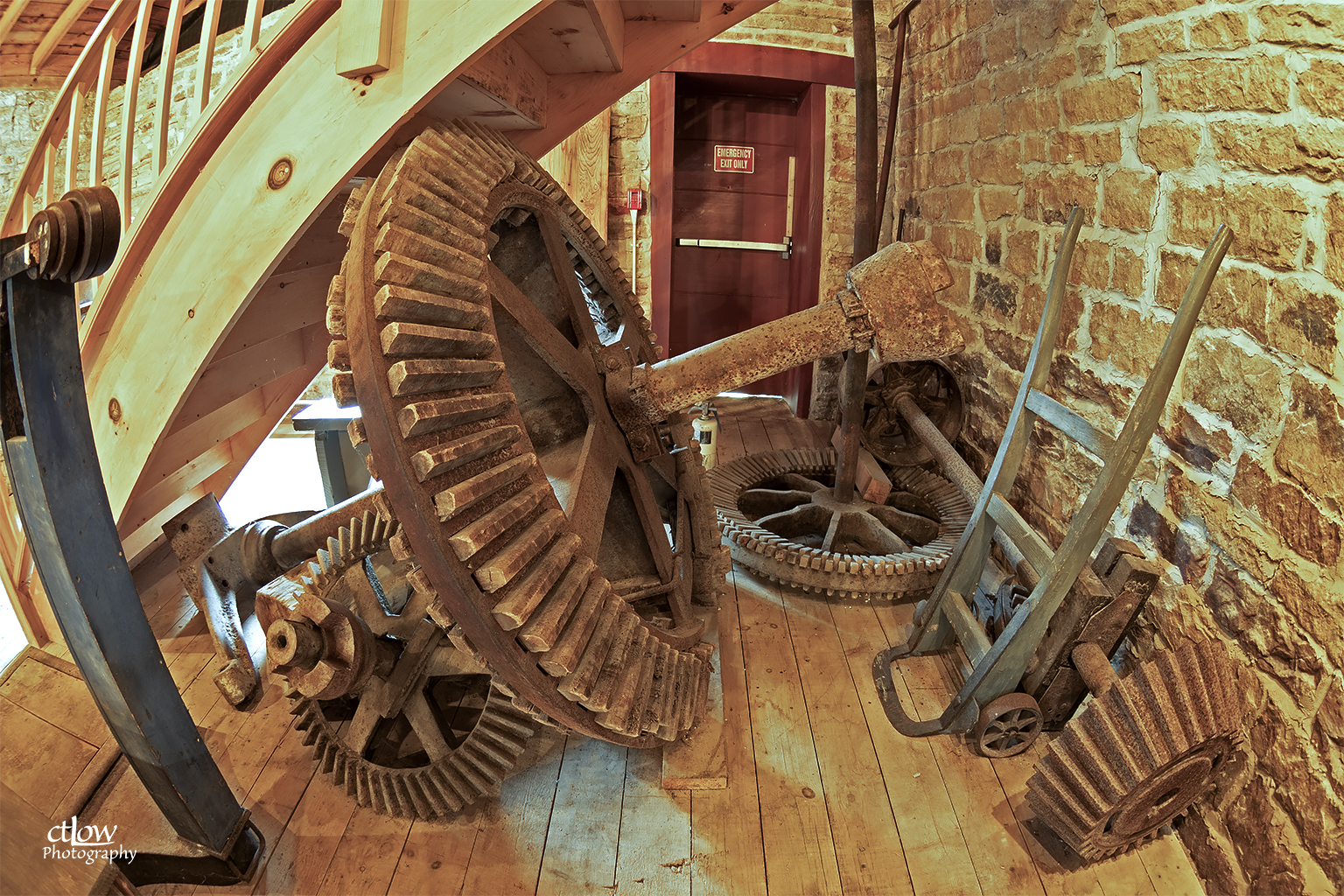
For its first half-century the mill was driven by a waterwheel. Power was distributed through direct-coupled wooden gearing to the millstones on the ground floor. The turbine hall on the north side of the building, a later addition, preserves the original waterwheel raceway intact beneath its floor.
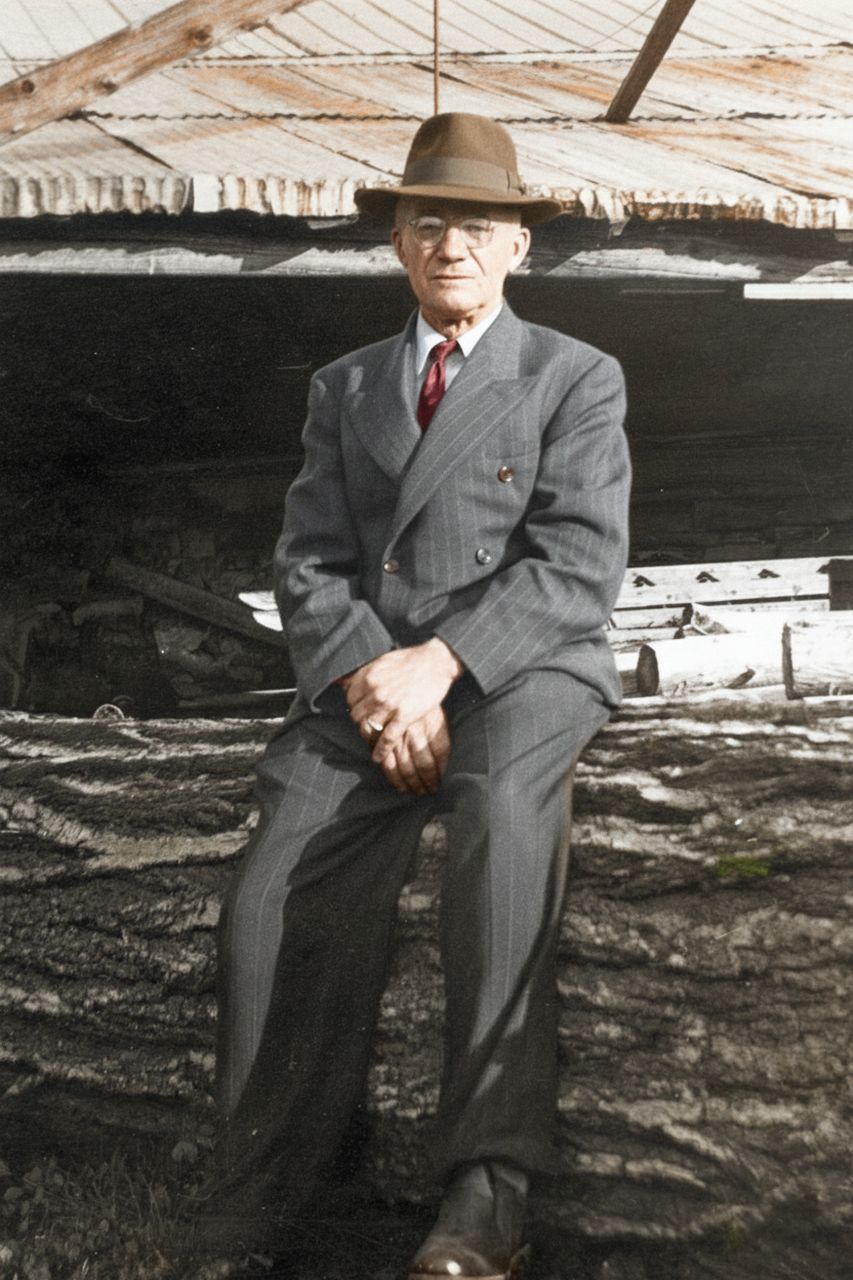
In 1861, Walter Denaut invested $20,000 — an enormous sum — in modernising the works. The 1861 census records this investment directly. Two cast-iron Swain turbines — designed in 1855, and perhaps the only pair installed in Ontario — replaced the waterwheel. The wooden gearing gave way to belt-and-pulley drives, and the mill became the largest custom and merchant mill in the upper Rideau watershed. In 1861 it produced 6,000 barrels of superfine flour for export.
Among the grains the mill ground in the later nineteenth century was the variety now known as Red Fife — Canada's earliest distinct strain of bread wheat, selected by the Peterborough farmer David Fife in 1842. By 1893, new owner George Haskin had replaced the millstones with a roller mill — a concession to the industrial milling technology that was, by then, supplanting stone-ground methods across the province. Heritage Red Fife wheat was restored to the mill in 2010.
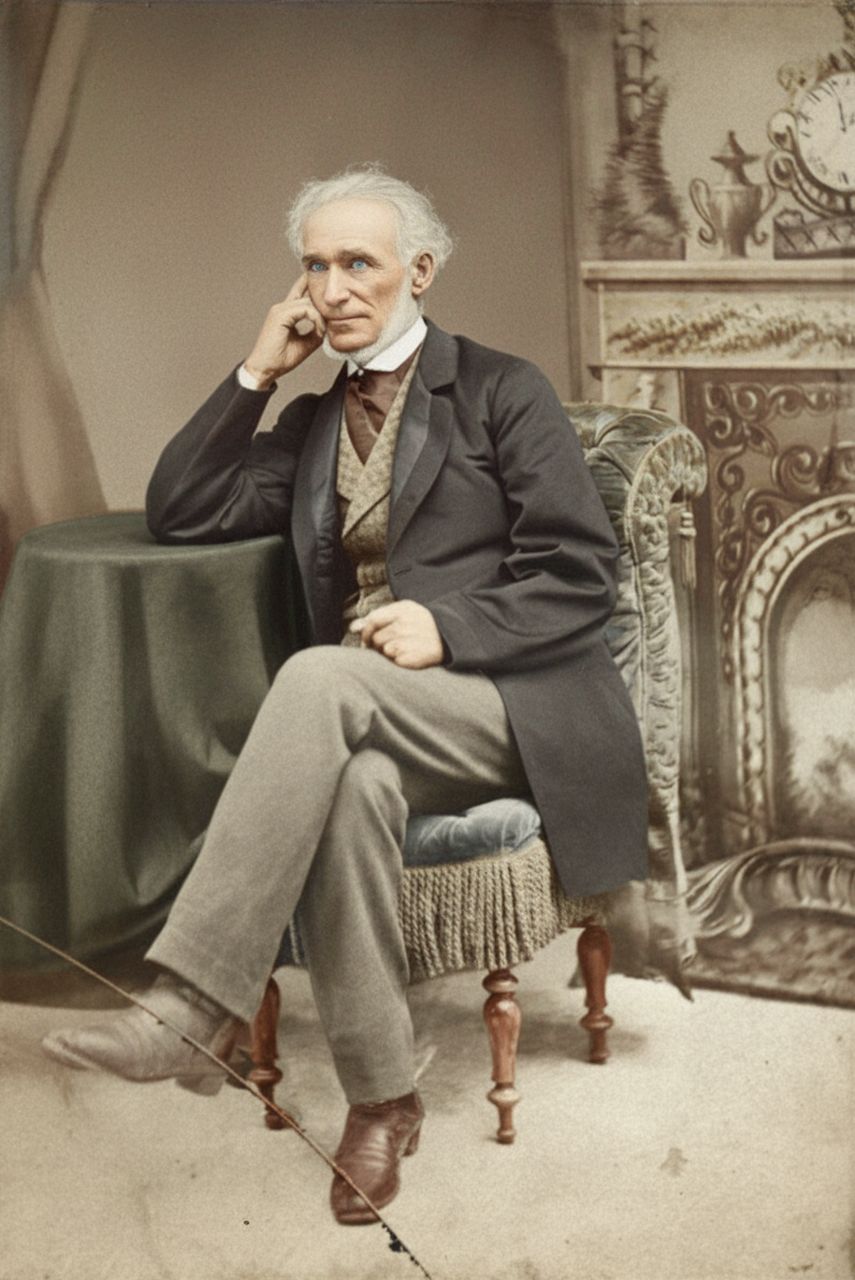
Walter Denaut, the Delta merchant who invested some $20,000 in modernising the mill in 1861 — including the twin Swain turbines that powered it for a century.
The last commercial owner. Steele deeded the mill to four trustees for one dollar in 1963, with the condition that it be preserved as a milling museum.
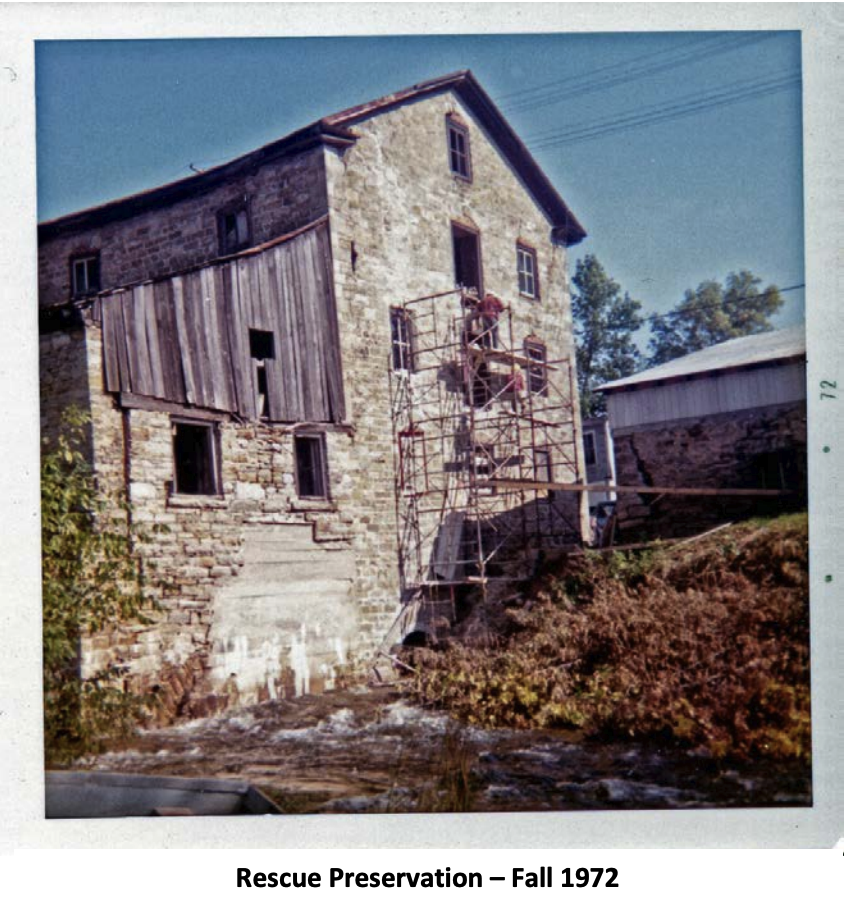
The mill ceased commercial operation in 1960. Its last owner, Hastings Steele, recognising that the building required a collective effort beyond any single proprietor, transferred the mill to four founding trustees on August 28, 1963: Albert Frye, Elizabeth Robinson, Mildred Sweet, and Robert Tuck. Those trustees formed the Delta Mill Society — one of Ontario's earliest volunteer heritage organisations — and formally incorporated it as a non-profit charitable organisation on August 17, 1972.
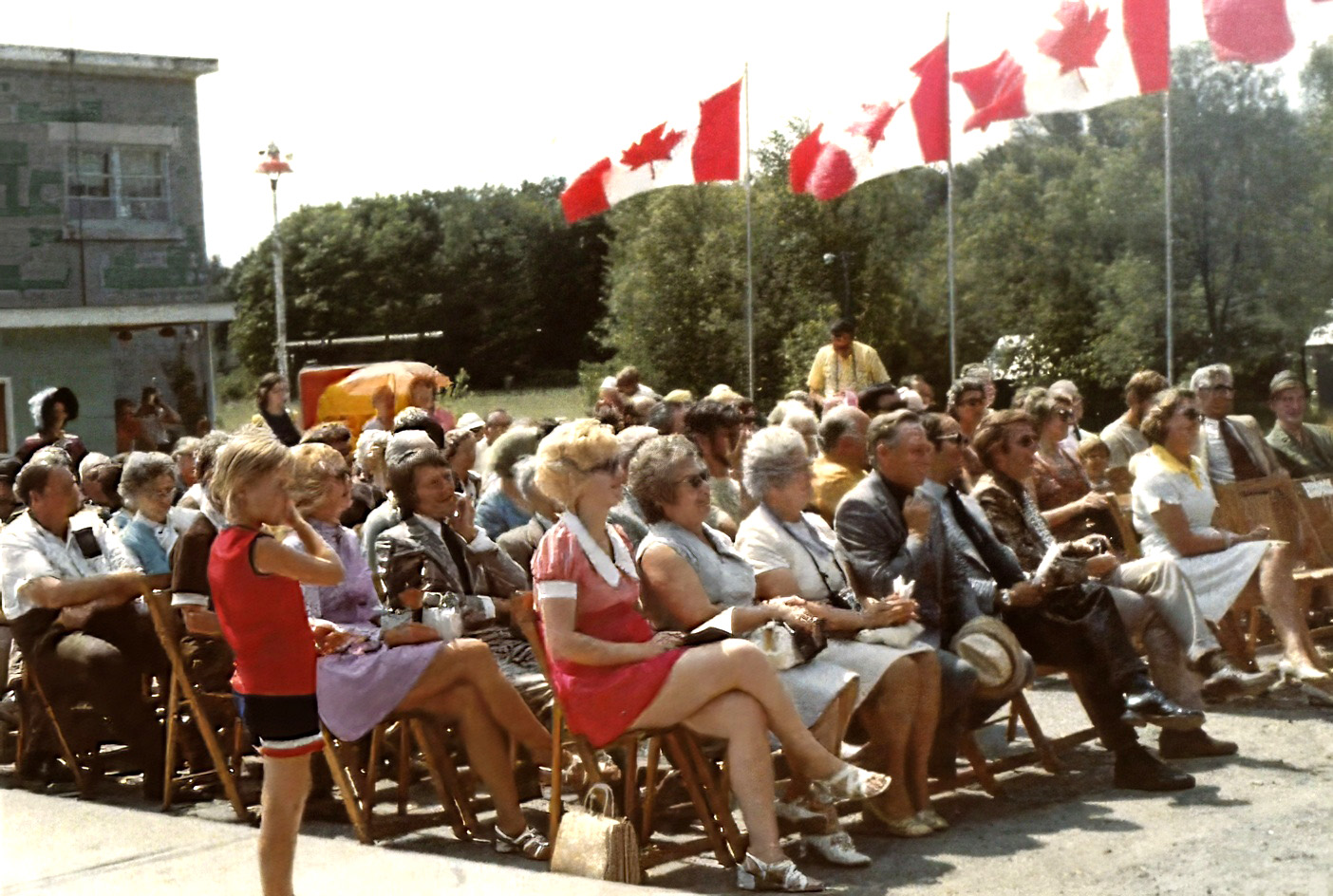
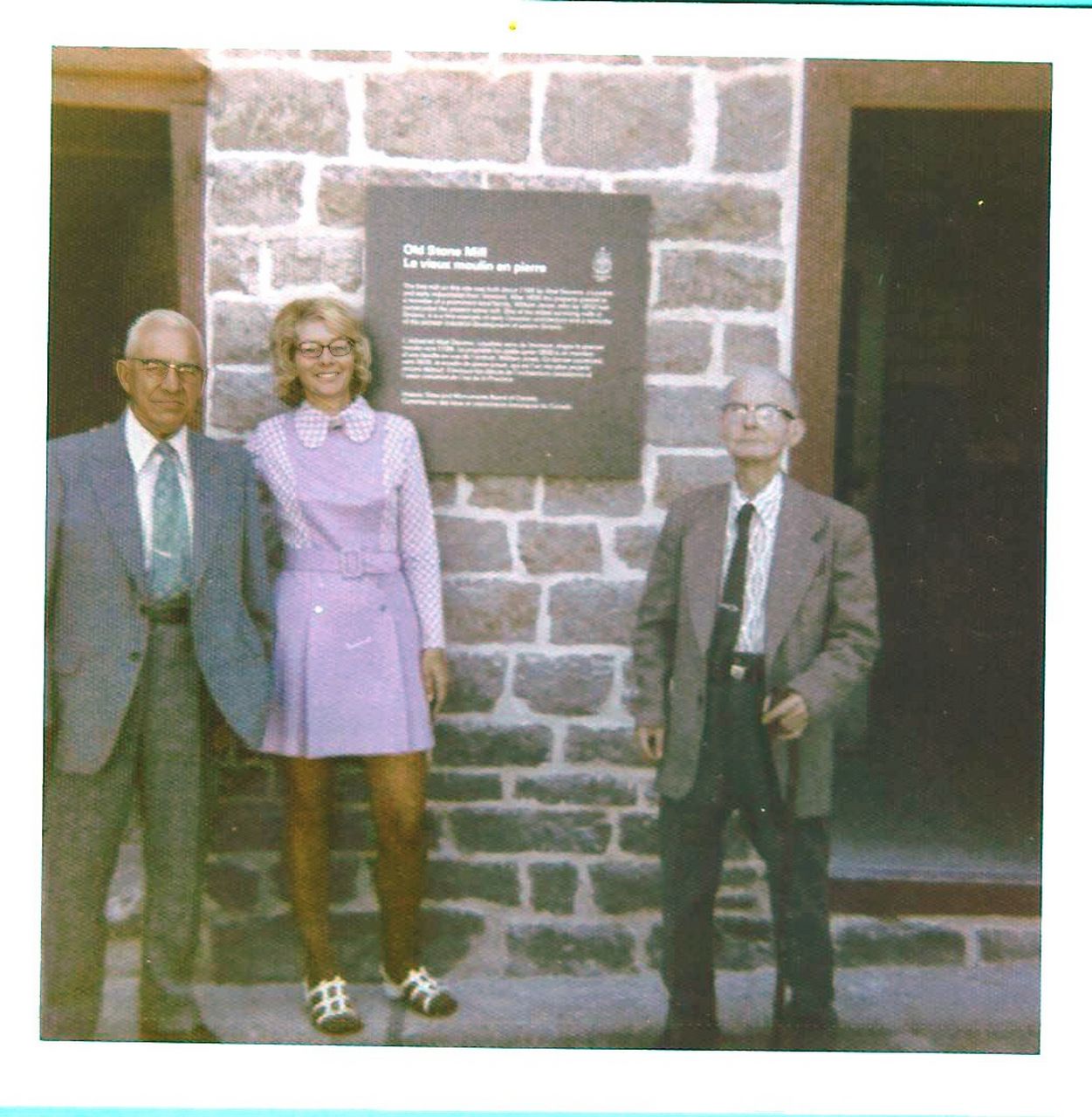
The work of preservation fell almost entirely to volunteers. Over the following four decades the Society rebuilt the roof in three campaigns, repointed the limestone walls, reconstructed the floors, the husk and the gearing, and — most ambitiously — restored a full run of stones to operating order. The Old Stone Mill was declared a National Historic Site of Canada in 1970, and listed under the Ontario Heritage Act in 1978 — among the earliest privately owned buildings to receive both designations.
By the bicentenary in 2010, the Society had invested some two million dollars in restoration and conservation, drawn almost entirely from donations, fundraising and the work of more than a thousand individual volunteers across half a century.
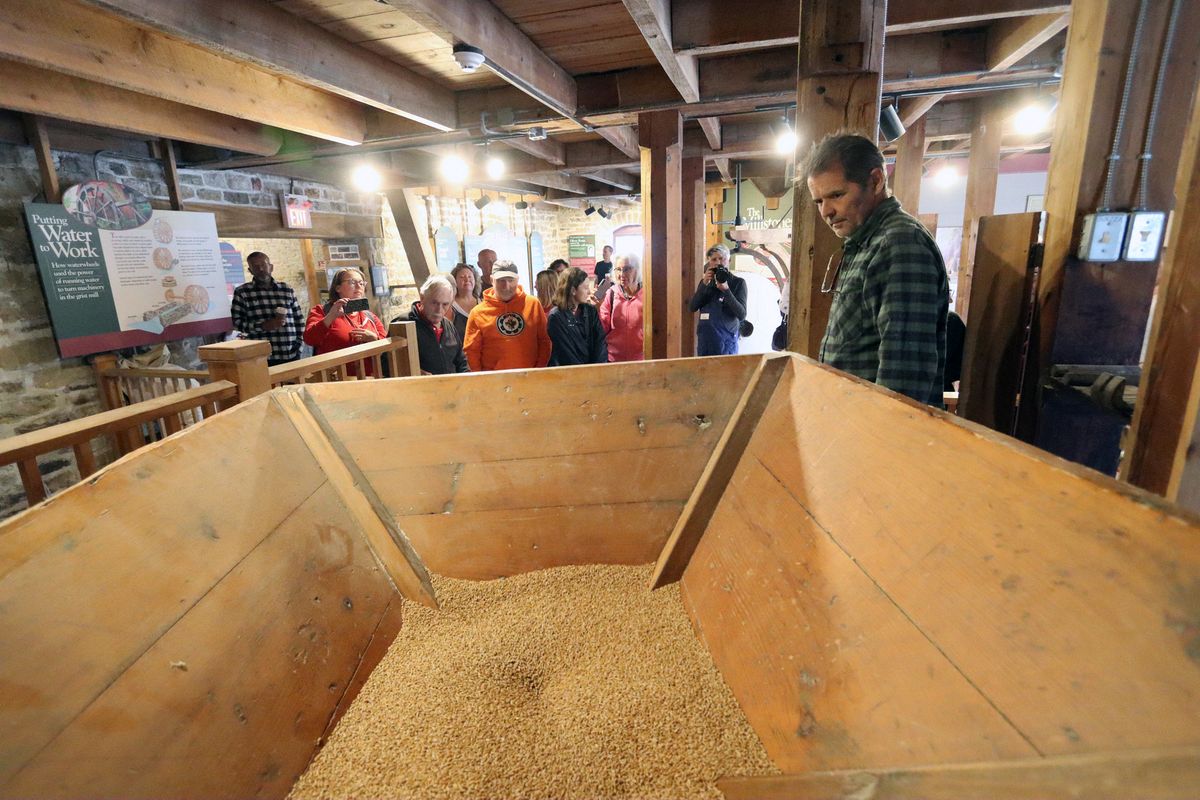
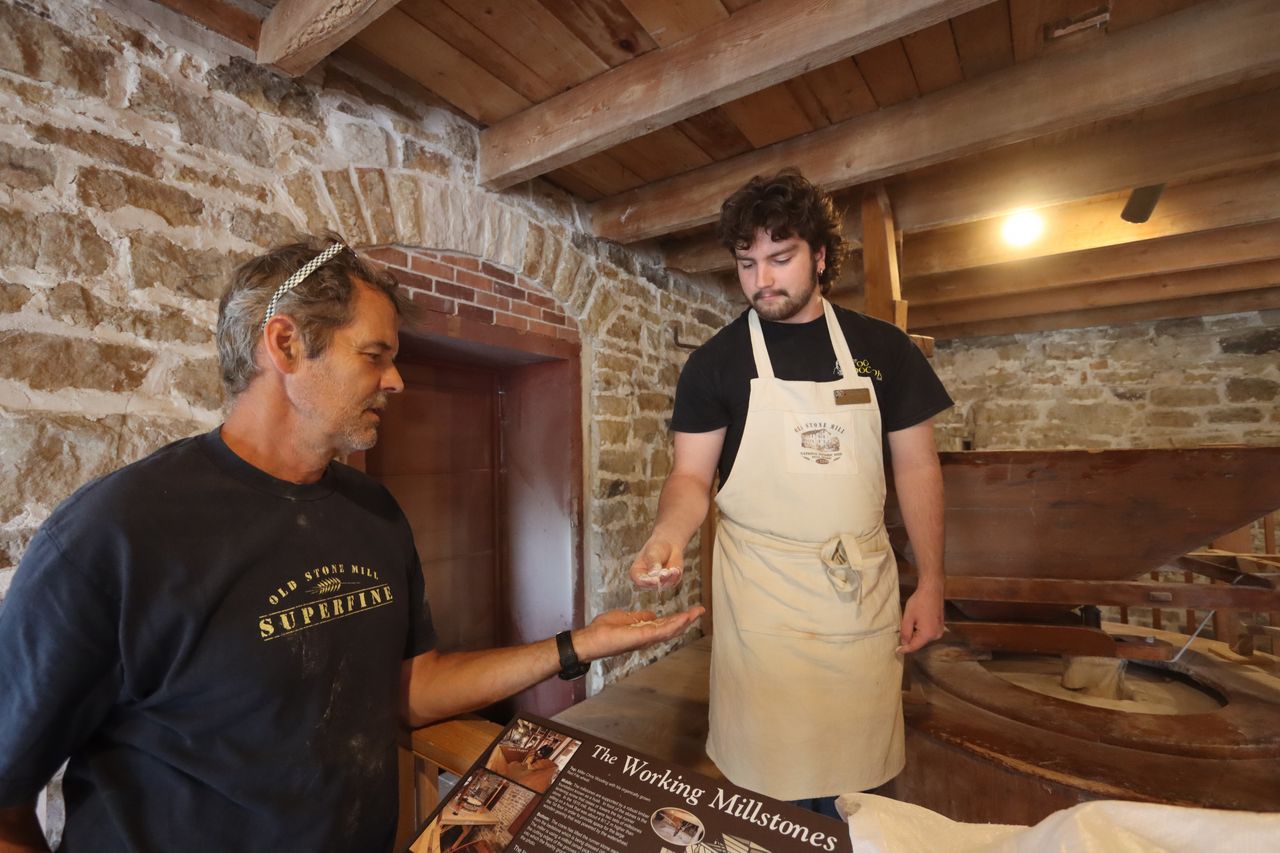
The mill operates as a public museum throughout the summer season. Heritage Red Fife wheat is grown locally and ground on the original French burrstones — restored to working order in 2010 — on scheduled milling days. Visitors may take home a paper sack of stone-ground flour.
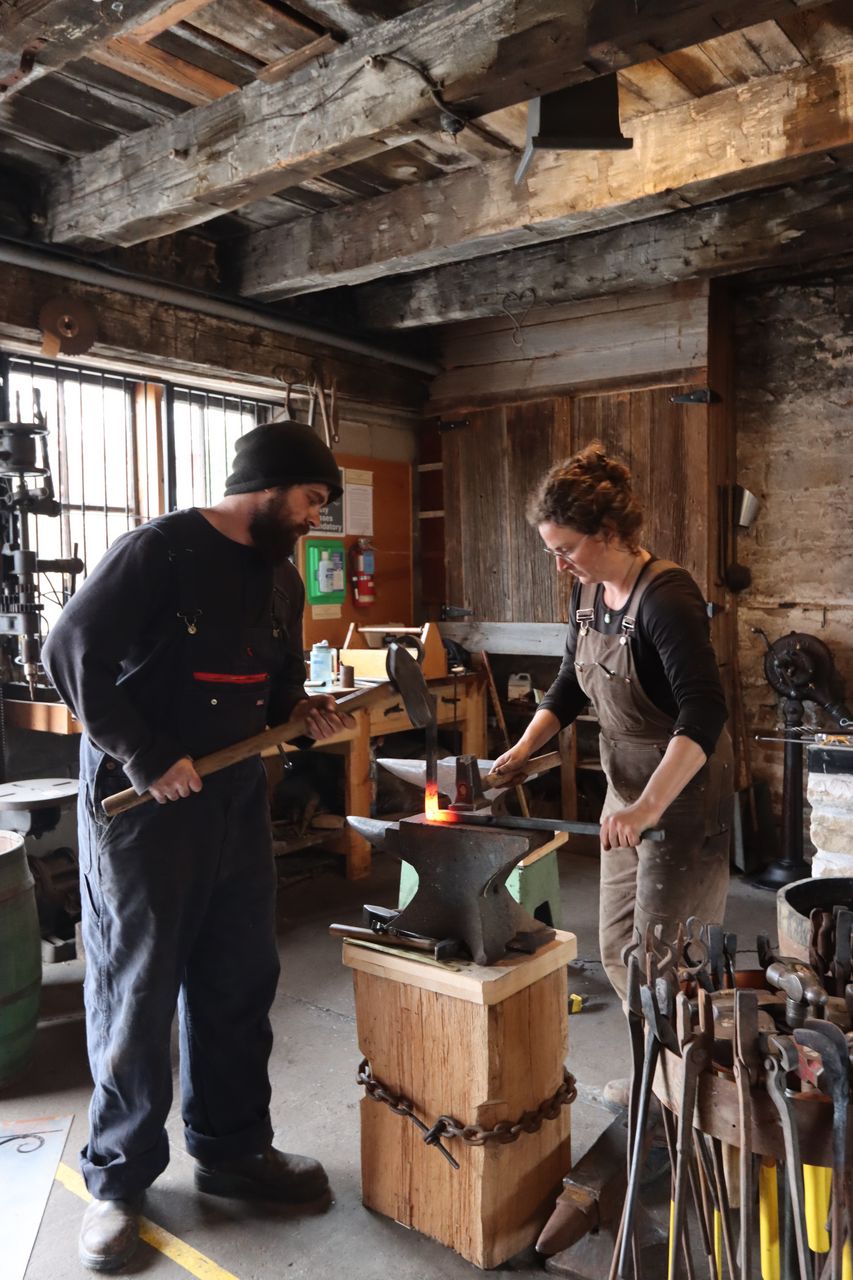
Adjacent to the mill, the Society's coal-fired Blacksmith Shop demonstrates the heritage art of ironworking — the trade that built and maintained the mill itself, whose wrought-iron nails of 1810 are still in the building.
Built in 1879–1880 and acquired by the Delta Mill Society in 1994, the former municipal hall serves the Village of Delta as a community space — host to concerts of the Festival of Small Halls, local events, and the annual Delta Harvest Festival each September.
The Delta Mill Society is a non-profit volunteer organisation founded in 1963 and formally incorporated in 1972. Its mandate is the preservation and interpretation of the Old Stone Mill and its companion heritage buildings — the Old Town Hall and the historic Blacksmith Shop — for the benefit of present and future generations.
The Society operates the mill as a public museum from Victoria Day through Labour Day each year. Members and volunteers conduct milling demonstrations using heritage Red Fife wheat, host blacksmithing workshops, and maintain the fabric of three nineteenth-century buildings on King Street in the Village of Delta, Ontario.
Since its founding the Society has invested more than two million dollars in restoration and conservation through donations, fundraising, and the labour of more than a thousand volunteers across six decades.
The oldest surviving pre-1812 stone grist mill in the Province of Ontario — in operation as a public museum since 1963.
The historical content of this publication is drawn exclusively from official sources maintained by the Delta Mill Society and published on the Society's website at deltamill.org.
The principal historical research underpinning the Society's archive was conducted and compiled by Ken W. Watson, whose comprehensive study of the Old Stone Mill, its builders, and its place within the settlement history of the upper Rideau watershed remains the authoritative record.
Additional source material includes the Society's photographic archive, historical census records, and documents from the public collections of Library and Archives Canada and the Archives of Ontario.