Built 1879 – 80 Township of Bastard & South Burgess
The Old Town Hall — Delta, Ontario
A HistoryIn Five ChaptersAnd a Timeline
A History of the Old Town Hall
A gathering place, courthouse, Masonic lodge, and community hall — in continuous service since 1879 and in the care of the Delta Mill Society since 1994.
Built1879 – 80
Acquired1994 · DMS
Restored2012
CustodiansDelta Mill Society
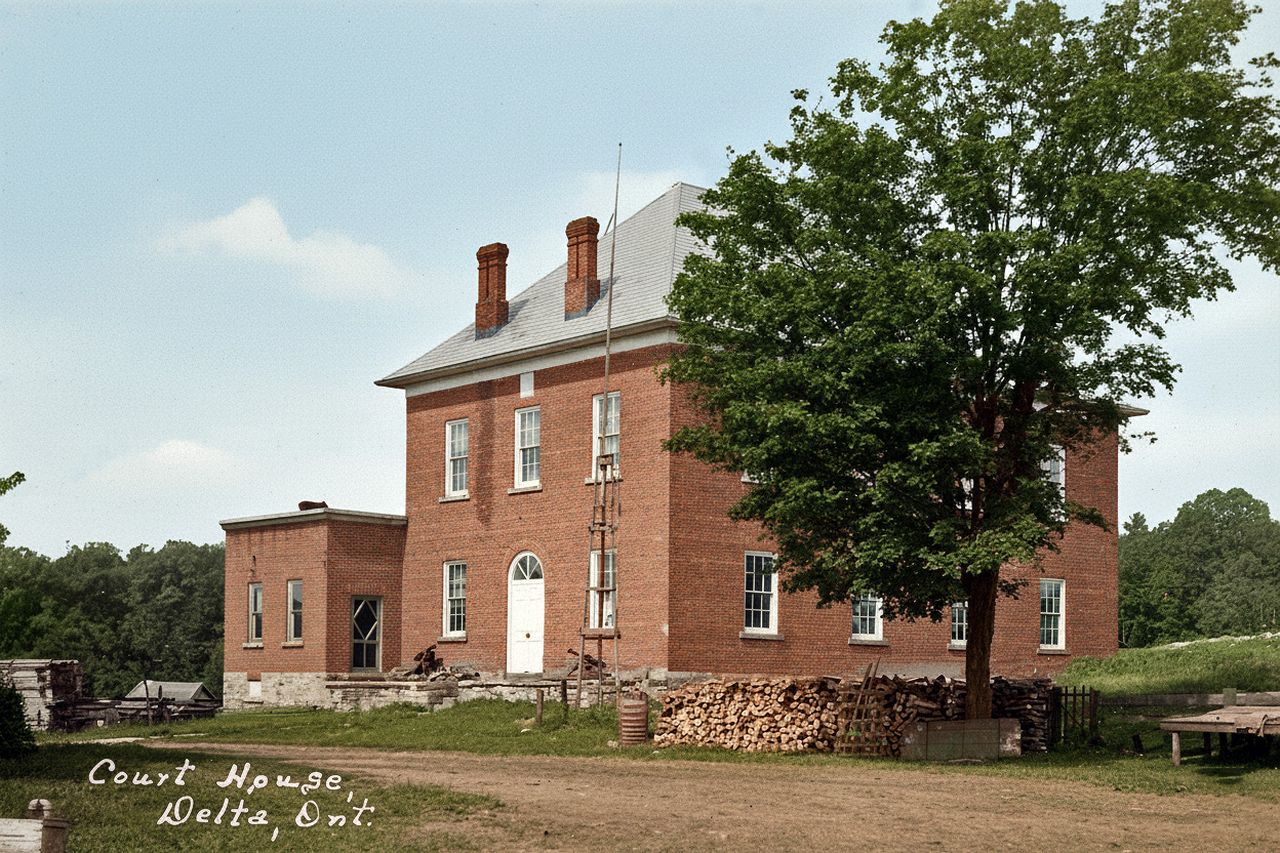
Plate IThe Old Town Hall on King Street, Delta, c. 1910 — symmetrical brick façade, original corniceDMS Historical Archive
The Old Town Hall has been at the centre of Delta's civic and community life since 1880 — a Masonic lodge on the second floor, municipal and court offices on the main floor, a jail in the basement, and a community gathering space for everyone in between.
What follows is a curated walk through five chapters of the hall's life — its founding, its architecture, the fire that very nearly claimed it, the cat paw prints in its bricks, and its present as a living community house — concluded by a timeline by which the visitor may locate themselves within the long arc of the building.
This is not a definitive history. It is, instead, an exhibition — assembled in the manner of its companion publication on the Old Stone Mill, with which it shares a village, a custodian, and a century of shared community memory.
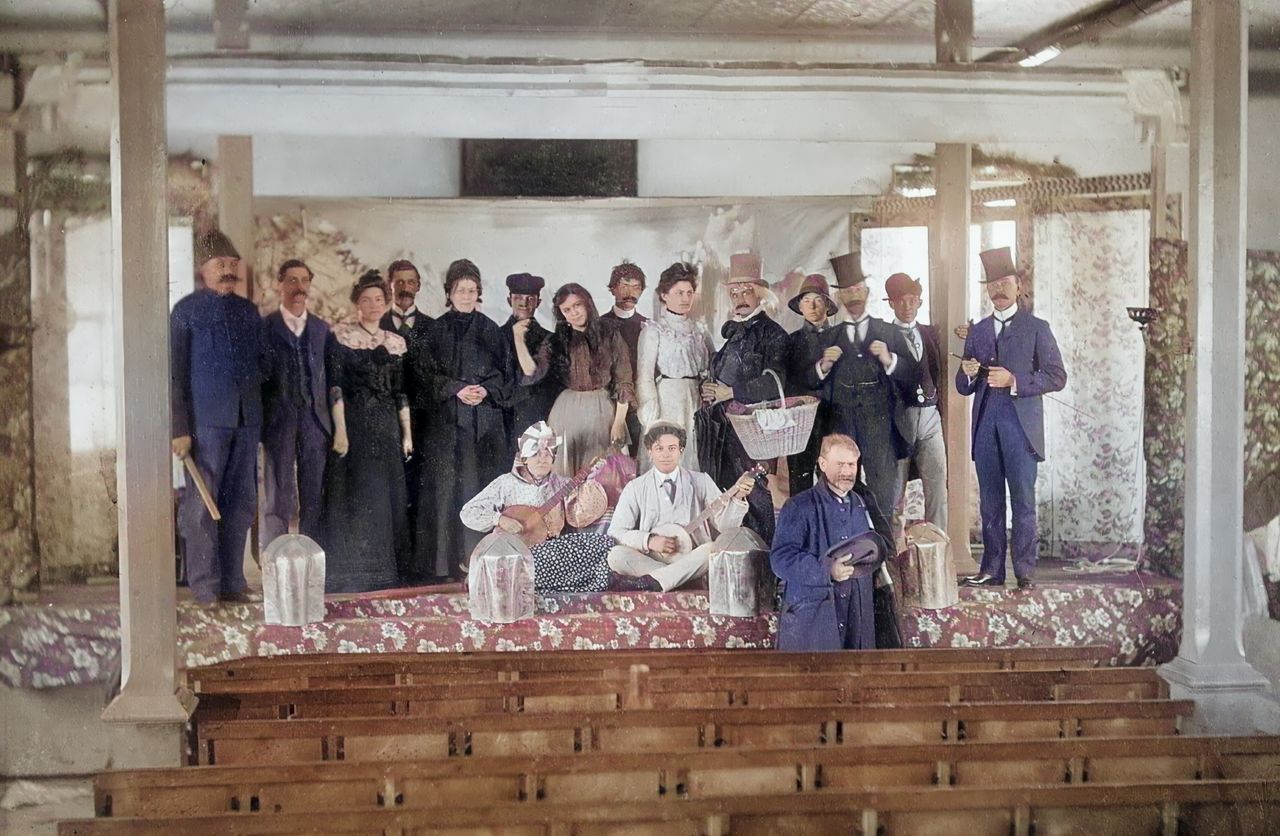
Plate IICast of the annual New Year's Day amateur play at the hall — date uncertain, c. early 1900sDMS Archive
Chapter One
I.
1879 – 1880 · Founding · Construction
Built for a Growing Village.
Joint ventureTownship & Lodge No. 370
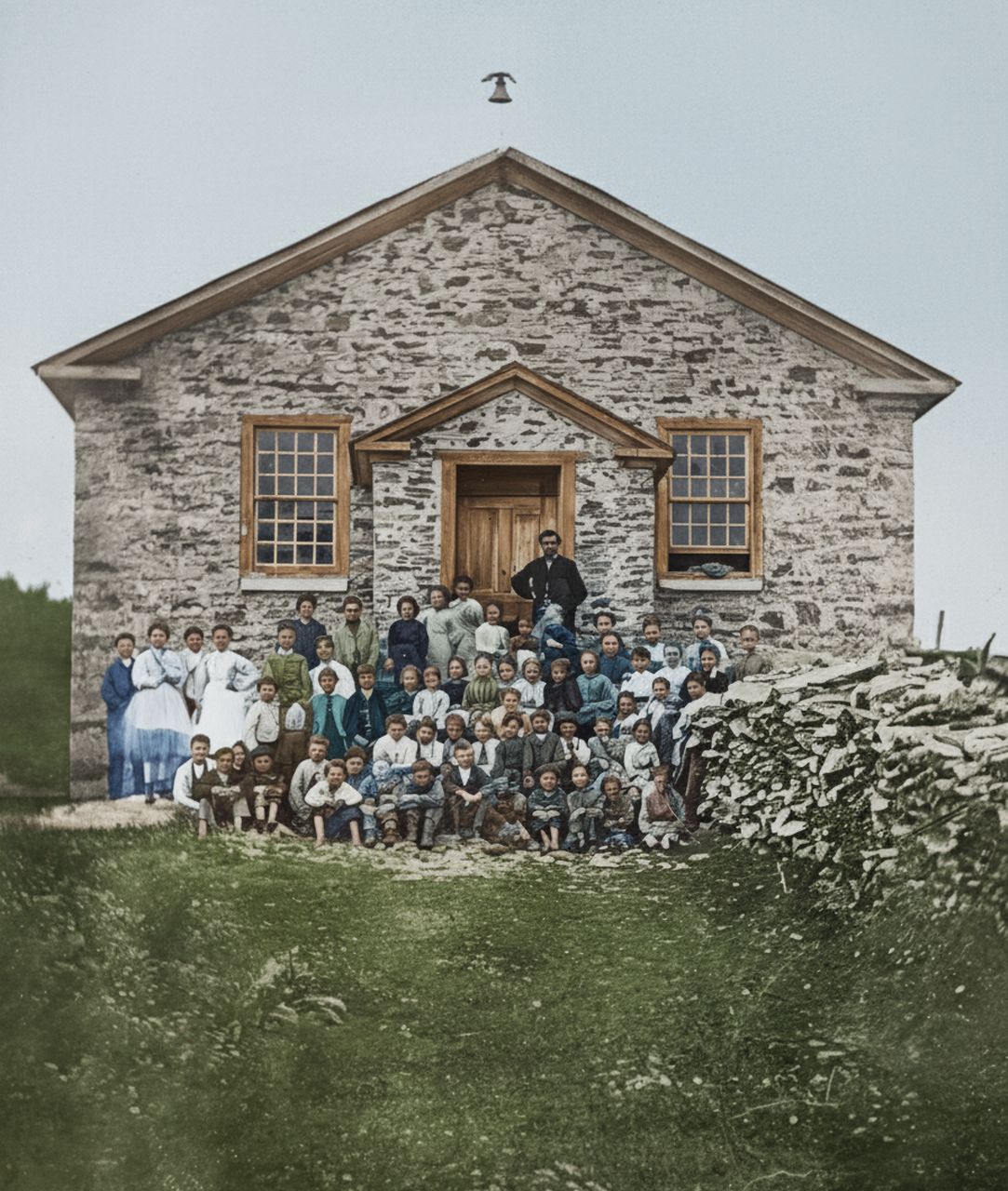
The Old Town Hall was built in 1879–1880 on the site of an earlier stone schoolhouse, raised as a joint venture between the Township of Bastard & South Burgess and Harmony Lodge No. 370, the local Masonic Lodge — one building for two purposes, designed from the outset to serve both the secular and the fraternal life of the village.
From the day it opened, the Masonic Lodge occupied the second floor, while the ground floor served as the municipal offices, the court offices, and the courthouse. A small jail occupied the basement.
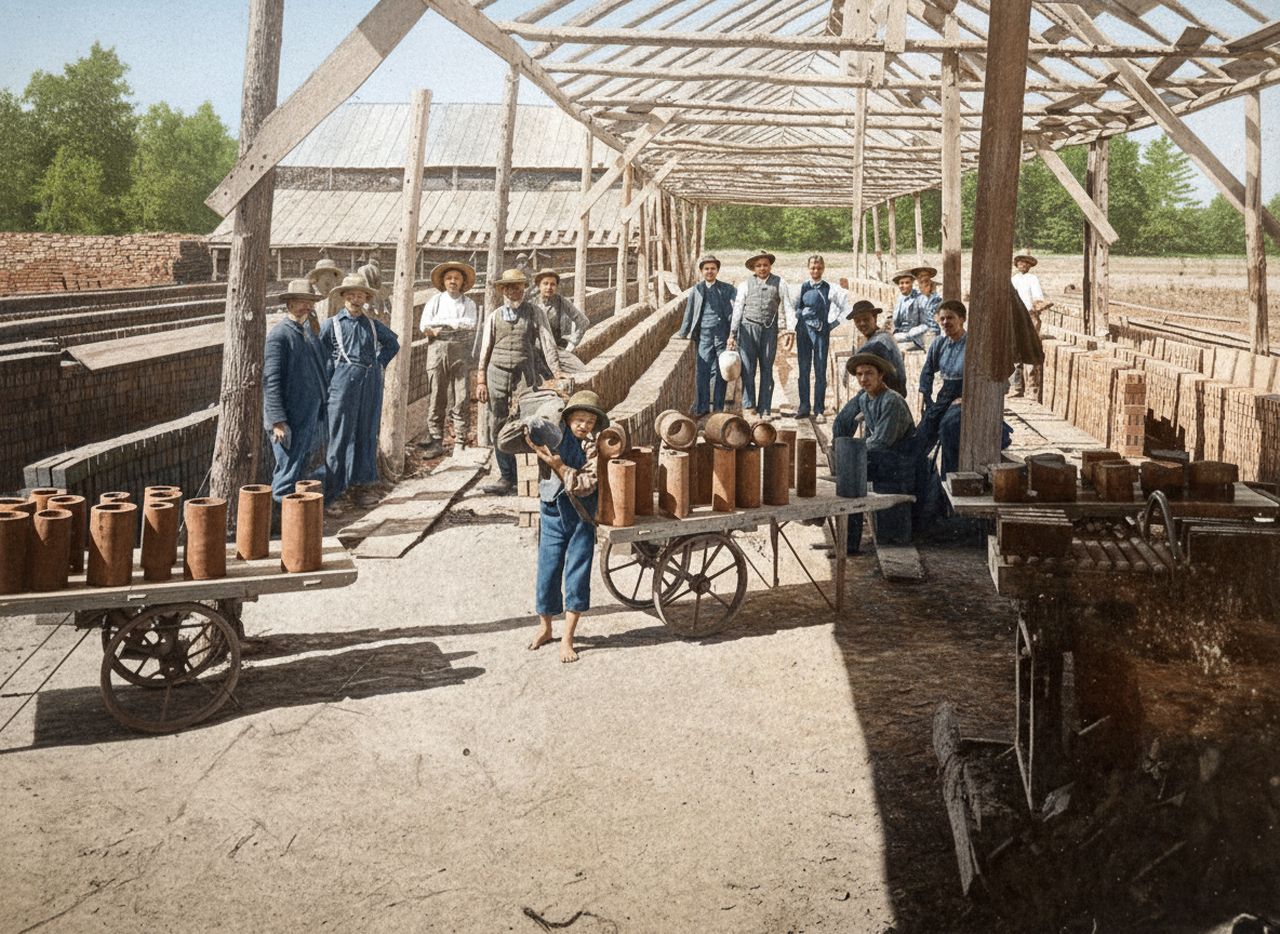
The bricks were made locally by Jasper Russell, whose brickyard stood behind today's post office. Russell charged four cents per thousand bricks. The clay was mixed by a horse walking in circles, attached to a pole that drove projections through the clay bed; it was then pressed into wooden moulds by hand and stacked on their side to dry.
Plate IIIStone School House, c. 1870 — the earlier building on the site where the Old Town Hall now standsDMS Archive
Plate IVJasper Russell's brickyard, c. 1900 — where the hall's hand-pressed bricks were madeDMS Archive
Builders
Township & Lodge
Construction
1879 – 1880
Building Material
Hand-Pressed Brick
Original Use
Civic & Masonic
— Bastard & South Burgess Council Minutes, 1880
The new hall is a credit to the township and an ornament to the village.
Township minute book · April 5, 1880
— 1900s —
Chapter Two
II.
Early 1900s – 1960s · Architecture · Adaptation
A Building That Adapted Through Time.
FormSymmetrical rectangular brick
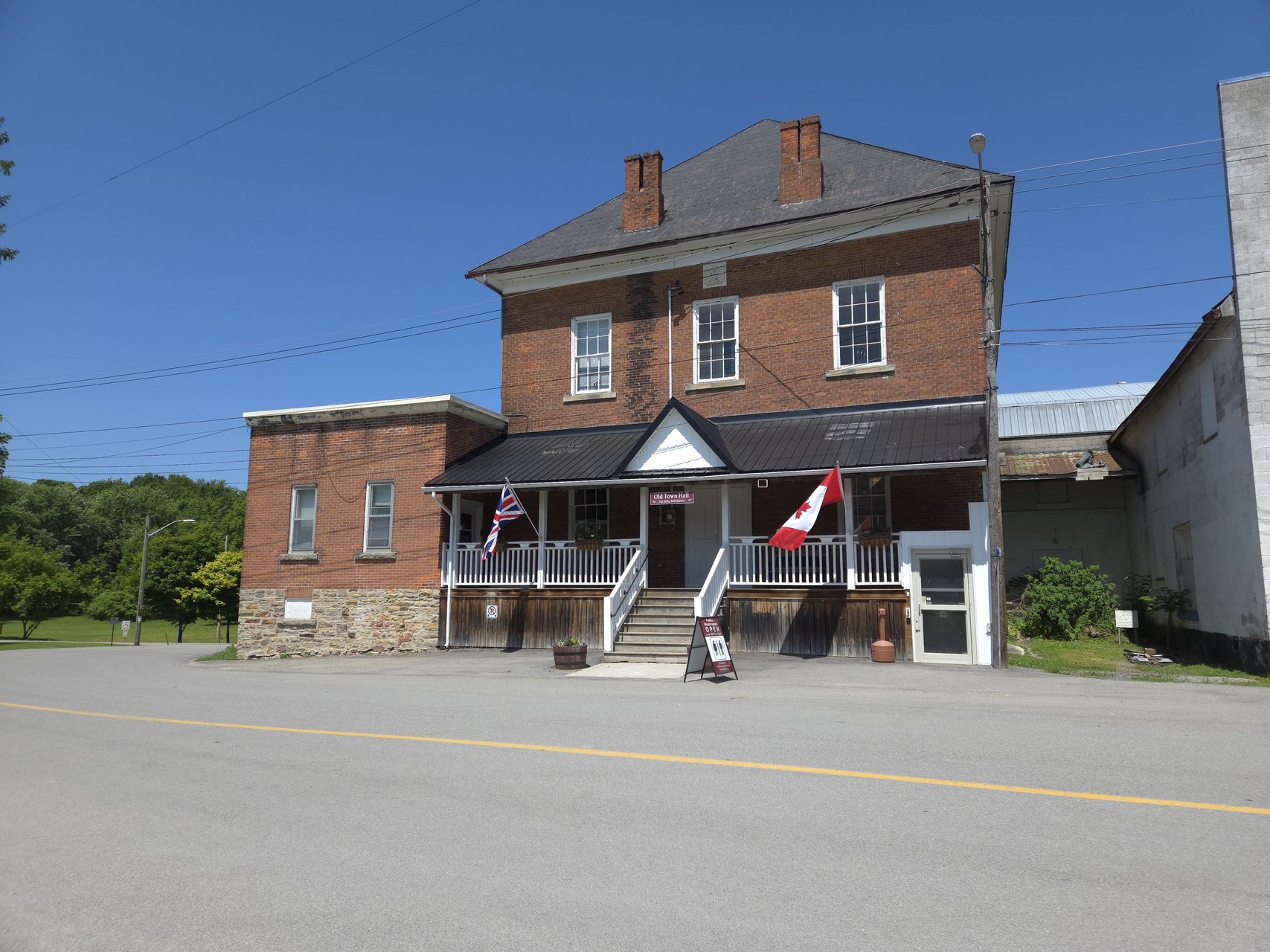
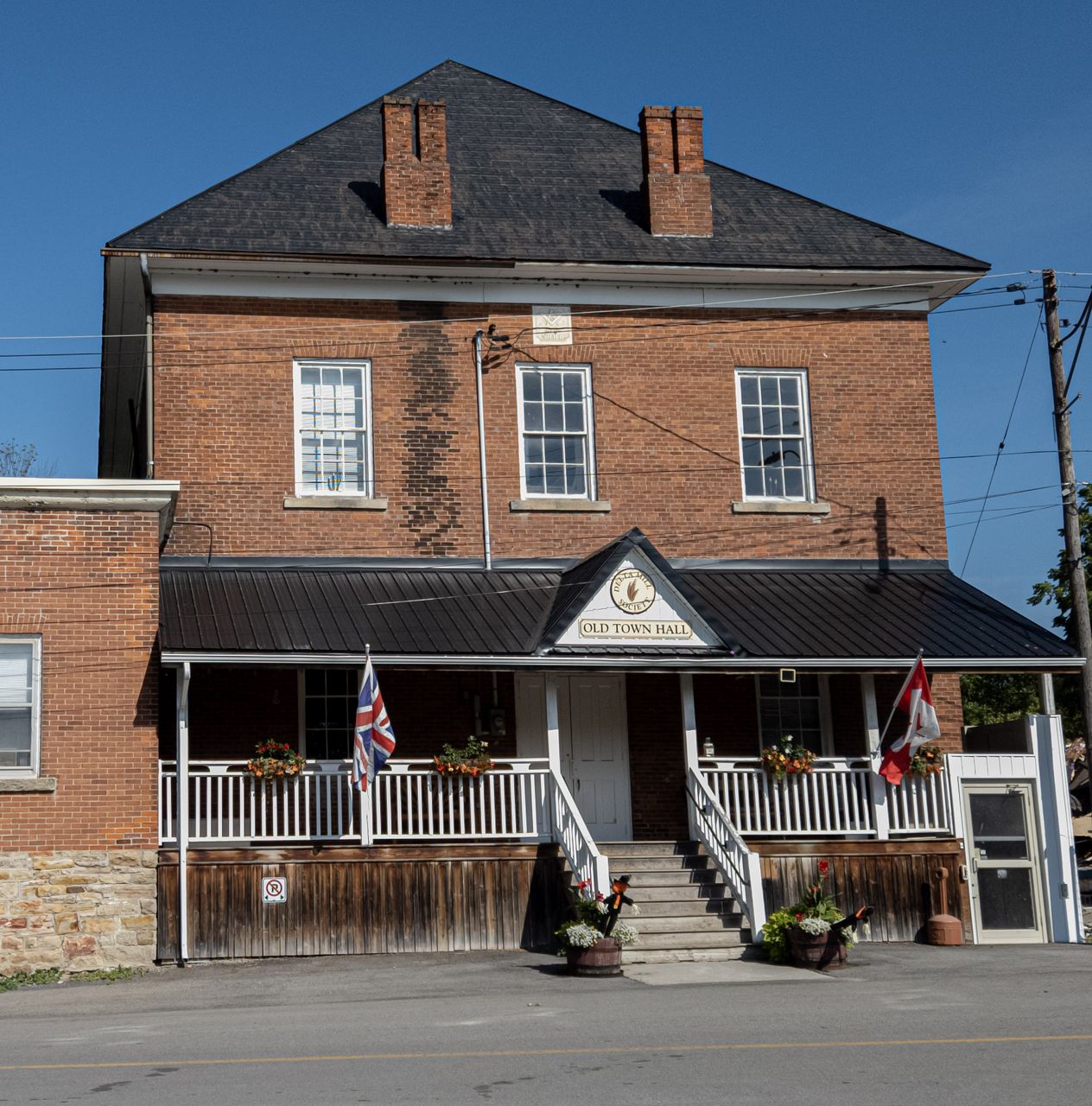
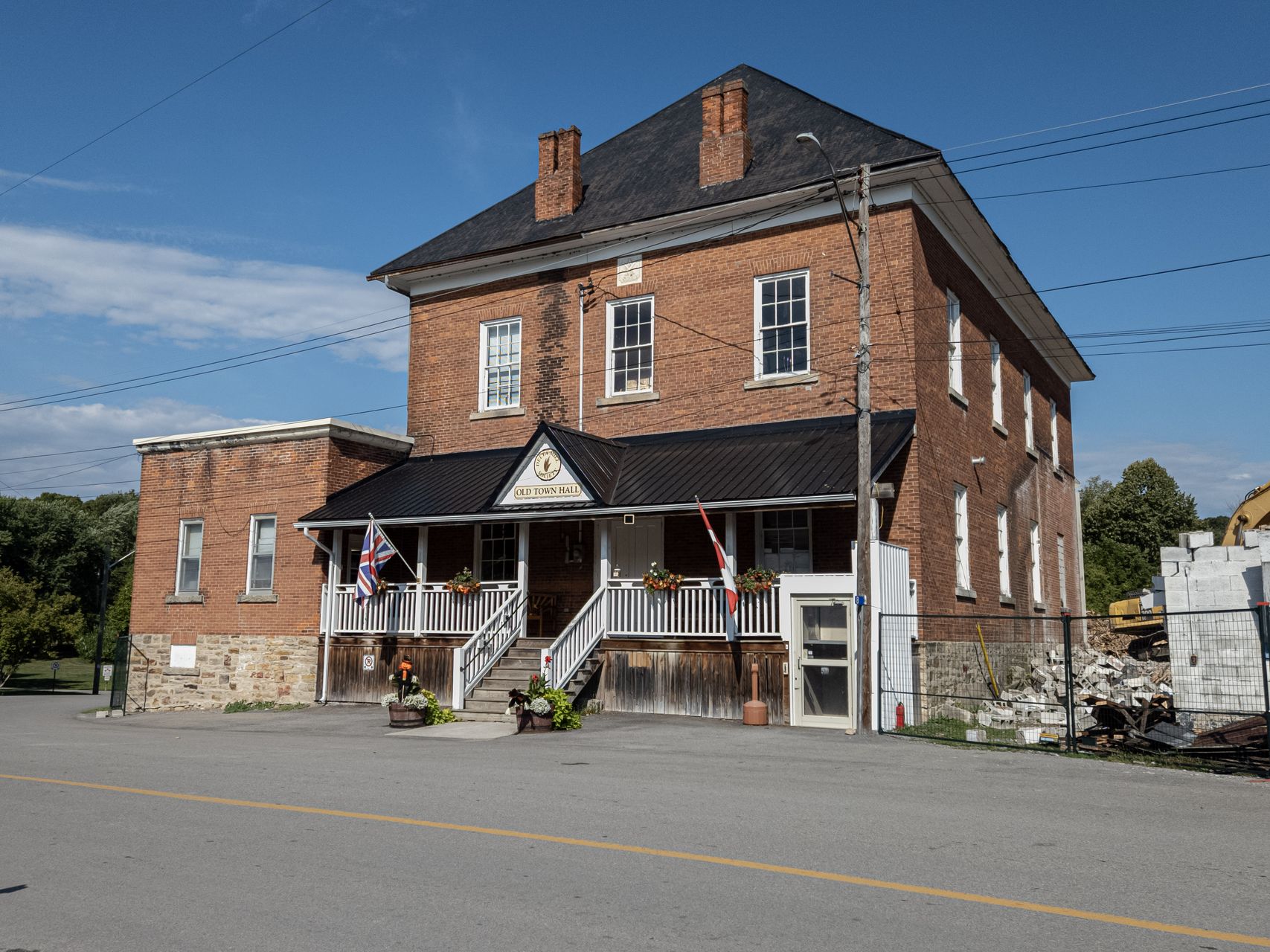
The original structure was a symmetrical rectangular brick building, reflecting the architectural ideals of the late nineteenth century — restrained, vertical, and unornamented save for a simple cornice and the dressed stone of its sills and lintels. Its proportions, even now, can be read on the standing façade.
In the early years of the twentieth century, a brick side addition was constructed to house expanded municipal offices, and a secure vault was added inside the building to protect the township's growing collection of land records, council minutes, and assessment rolls.
During the 1960s — by which time the hall served as much for community gatherings as for the business of the township — kitchen and washroom facilities were introduced, allowing the building to continue hosting suppers, dances, weddings, and the routine social life of the village.
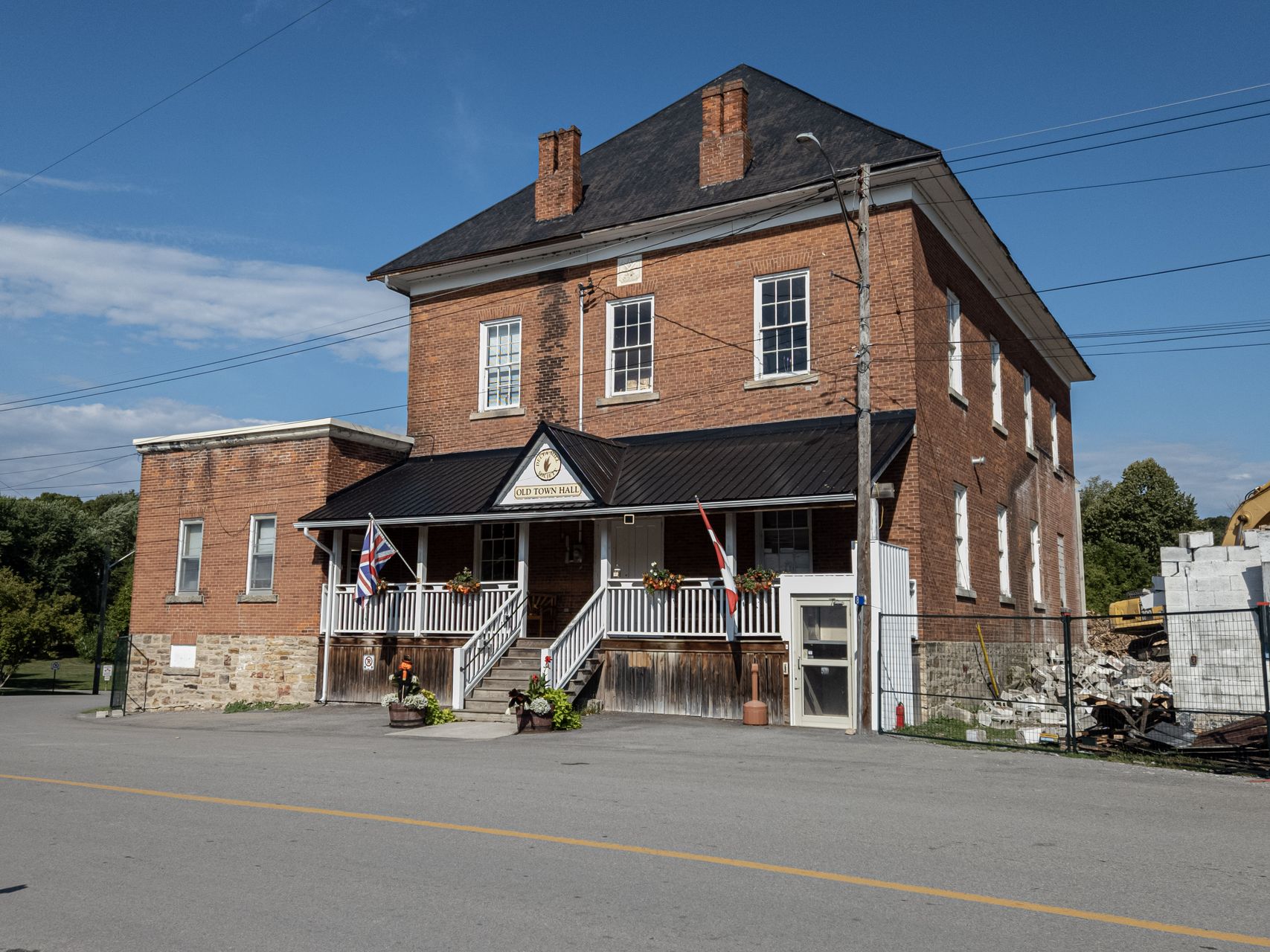
Despite these changes, the building retained its historic character, and remained central to village life for generations. The principal walls, the roof line, and the proportions of the front elevation are all original; one may stand in the doorway today and look out upon a street much as it appeared in the year the hall was raised.
Plate VThe original brick façade — detail of cornice and upper windowsDMS Survey
Plate VIThe hall's south elevation, showing the later side addition, c. 1905DMS Archive
Footprint
Rectangular · symmetrical
Storeys
Two & basement
Material
Local hand-pressed brick
Additions
1905 · 1960s
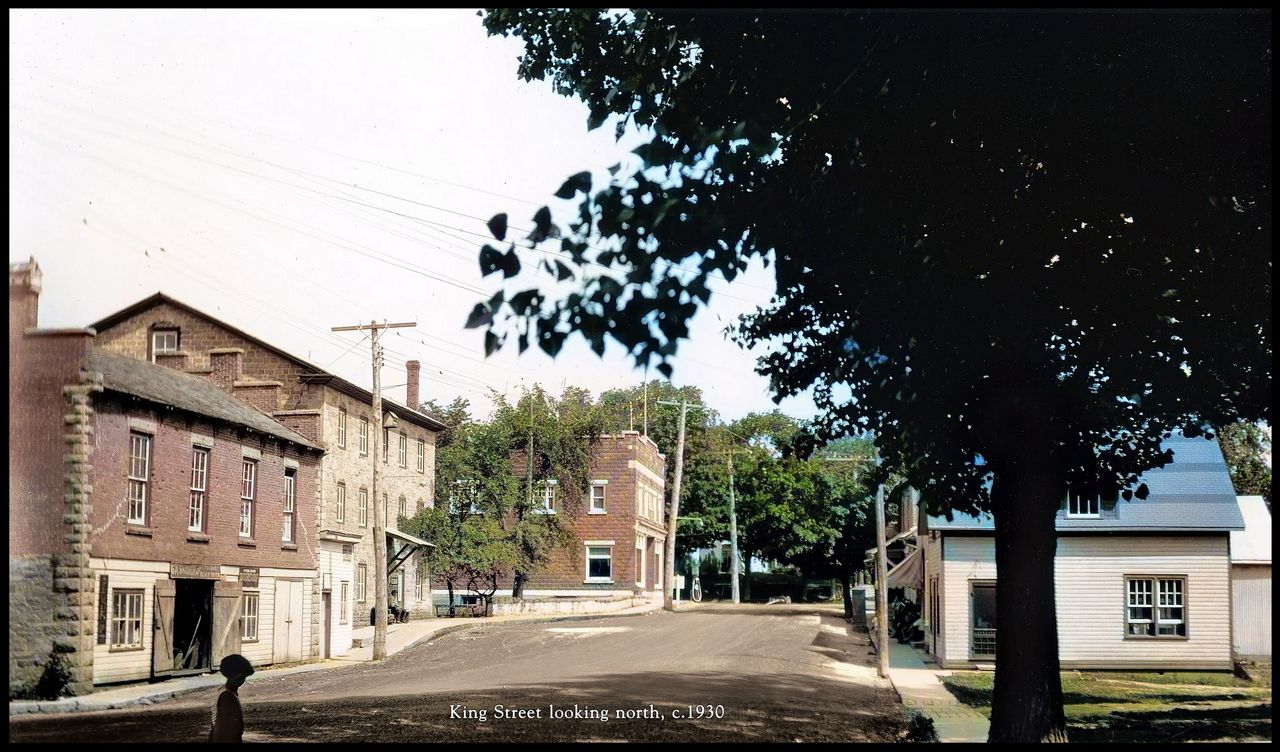
Plate VIIKing Street looking north, c. 1930 — the village commercial district at its early-twentieth-century peakDMS Archive
Chapter Three
III.
February 24, 1888 · The Night of the Fire
The Women Who Saved the Hall.
Recorded inContemporary press · 1888
Shortly after noon on Friday, February 24, 1888, fire broke out in the Division Court's office on the ground floor of the Old Town Hall. Dense smoke quickly filled the building, and without modern firefighting equipment, the structure seemed in danger of being lost entirely.
Citizens rushed to the scene. Men, women, and children formed two bucket lines from the nearby creek, passing pails of water hand to hand. The smoke was suffocating, and many of the contents of the building were damaged by water in the effort to save them.
What follows is drawn from the contemporary press account published in the Farmerville (Athens) paper.
Plate VII · 07
The Old Town Hall, Delta, c. 1910 — twenty-two years after the fire
Plate VIII · 08
Cast of Delta's annual New Year's Day play at the hall, c. early 1900s
Plate IX · 09
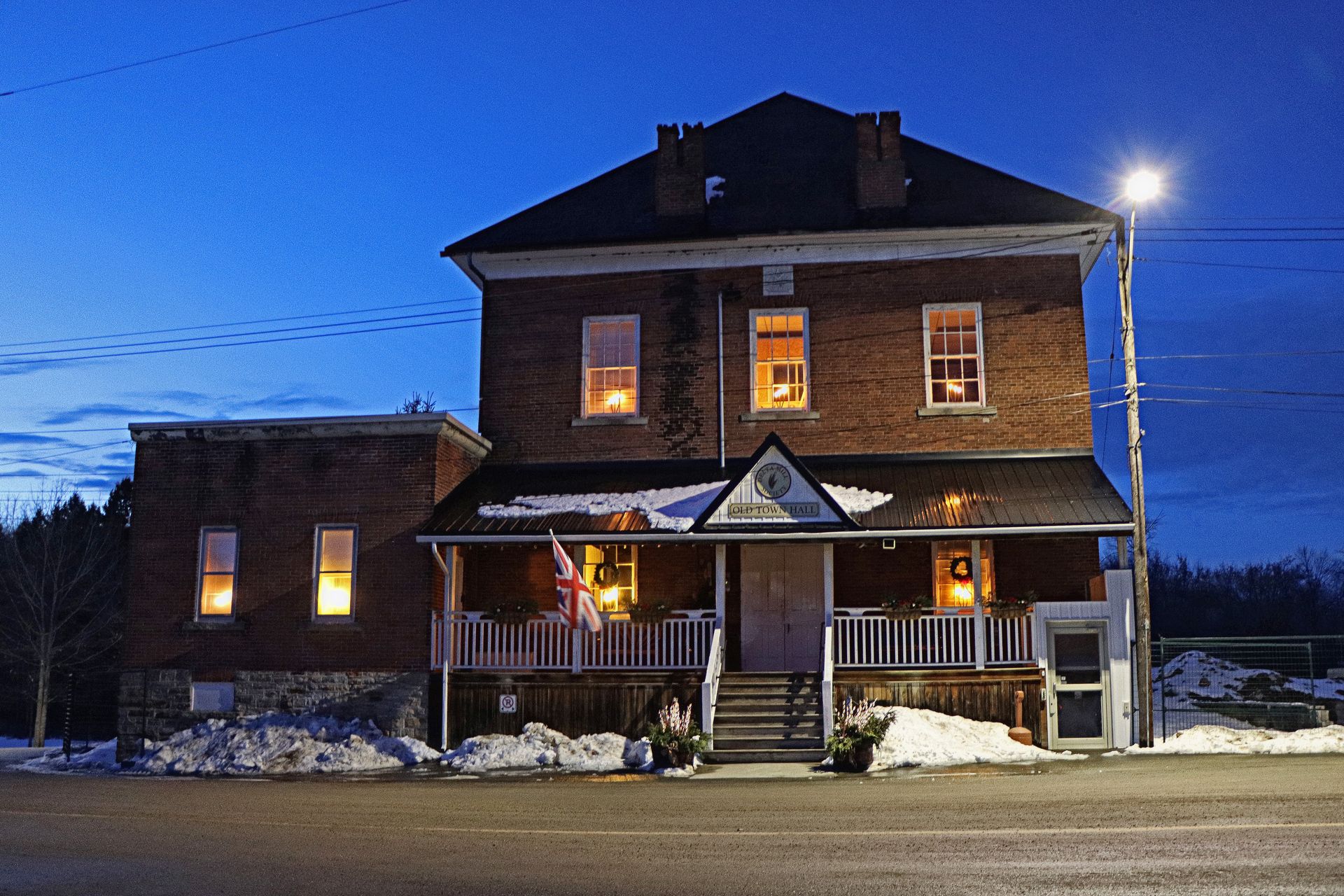
The Old Town Hall, Delta — front elevation, King Street
Act One · Exhaustion
As the fire spread, the men began to lose hope.
Bucket after bucket from the creek; the smoke pouring from every part of the building. By about two o'clock in the afternoon, the contemporary record agrees, the determination of many had given way and the crowd's resolve was breaking.
Act Two · Refusal
But the women of Delta refused to surrender the building.
They urged everyone to continue fighting the flames, and doubled their own efforts at the line. Their determination reignited the spirit of the crowd, and by half past four the fire was extinguished — the walls standing and the roof intact.
Press Account · 1888
Source
Farmerville (Athens) paper
Date
February 1888
Subject
The fire at the town hall
"
The women exhibited the stuff they were made of.
Quotation · 1888From the contemporary press account of the fire, published in the Farmerville (Athens) paper.Contemporary press · 1888
Though the interior was badly damaged, the walls and the roof survived. The community returned, in the weeks that followed, to refit the rooms — re-plastering, replacing floor boards, rehanging doors — without ever fully removing the older, blackened wood beneath.
Today, hidden charred timber under the floors and inside the walls still quietly tells the story of that fire — and of the women whose persistence saved the Old Town Hall for future generations.
— Paws —
Chapter Four
IV.
1879 · A Small Accident, Preserved
Paws Frozen in Time.
LocationFront & side door bricks
Near the front and side doors of the Old Town Hall, careful visitors can still find cat paw prints impressed into the original bricks. When the bricks were stacked on their side to dry at Jasper Russell's yard in 1879, a cat walked across them, leaving permanent marks that are still visible today.
The bricks were made at Jasper Russell's brickyard, located behind today's post office. Russell charged four cents per thousand bricks. Clay was mixed by a horse walking in circles, then pressed by hand into wooden moulds and stacked on their side to dry. At least one cat walked across the drying bricks — and the prints remain.
Specimen Drawer · Cabinet IV
Three prints & a mould
DMS Object Coll.
X.Front-door paw print
XI.Side-door paw print
XII.Third, partial, sill
XIII.Brickmaker's mould
How the brick was made · Jasper Russell's yard · 1879
i.
Clay mixed
Local clay turned and tempered by horse-powered machinery on the brickyard floor.
ii.
Pressed by hand
The clay was pressed into wooden moulds, struck off level, and turned out on the drying ground.
iii.
Laid out to dry
Soft for hours each afternoon — long enough for a cat to walk across, and leave its mark.
iv.
Laid into the wall
Carted to the building site on King Street and laid into the walls of the new town hall, one by one.
— 1994 —
Chapter Five
V.
1979 – Present · Restoration · Renewal
From Town Hall to Community Heart.
AcquiredDelta Mill Society, 1994
In 1979, the municipality and the Masonic Lodge vacated the building. For a century, the hall had been continuously occupied by one or both of its founding tenants. The building was then used for a time by the Delta Lion's Club.
In 1994, the Delta Mill Society purchased the Old Town Hall and repurposed it to house a portion of the Society's artefact collection and to provide an office. From 1999 to 2011, the Society used the main hall as a museum, exhibiting artefacts and photographs from the Old Stone Mill's history while the mill itself was being restored.
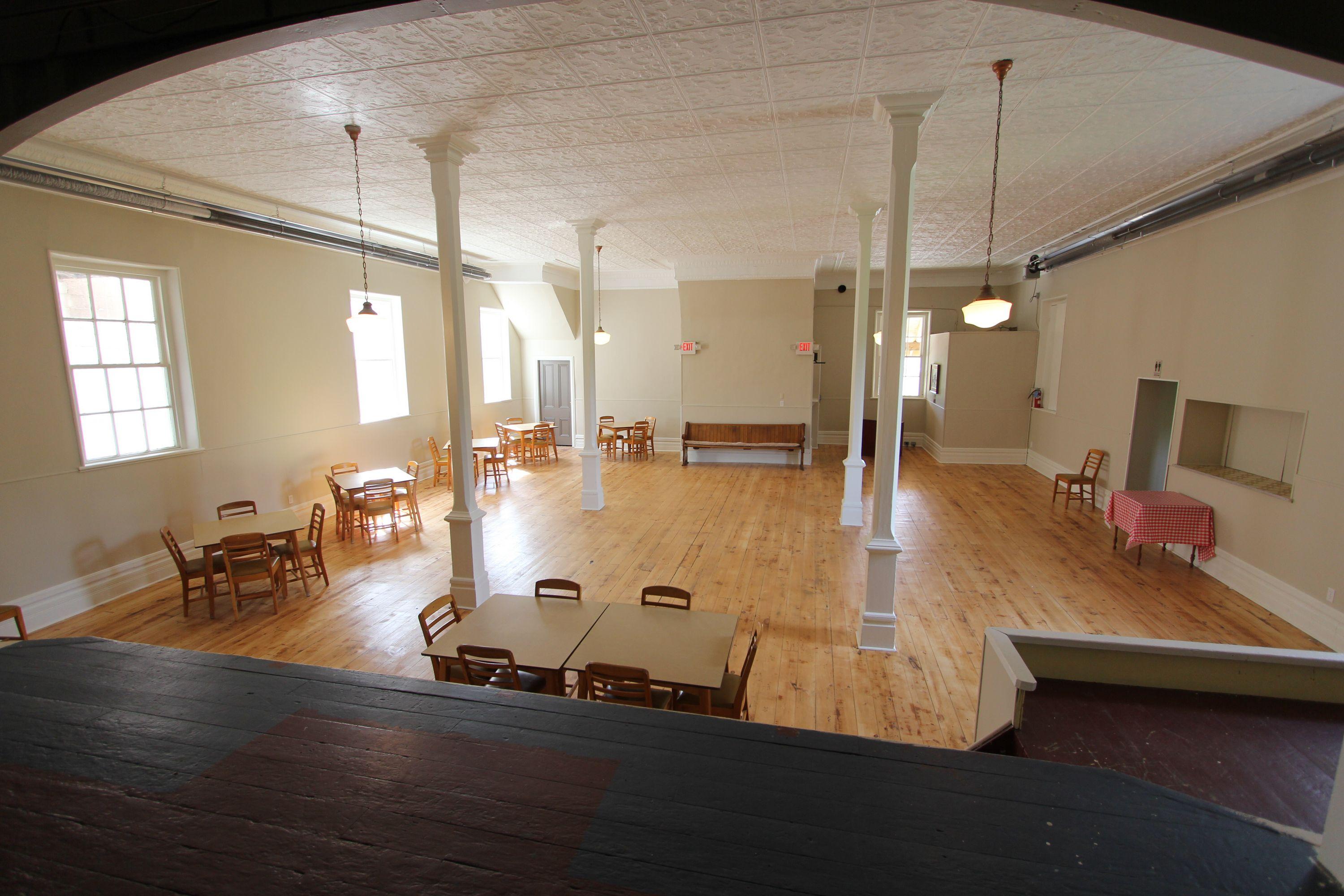
In 2012, major restoration efforts returned the hall to its historic appearance while improving accessibility and community use — a careful balance of conservation and adaptation, in keeping with the building's century-and-a-half-long habit of accommodating new purposes within an unchanged frame.
Today, the Old Town Hall continues to host gatherings, performances, celebrations, exhibitions, and events — carrying forward more than a century of shared community memory under the same roof, and beside the same brickwork, with which it began.
Living Heritage
A working community house
Restored in 2012 to its historic appearance, the hall is in continuous use today as a public gathering space — by the Society, the township, and the residents of the Village of Delta.
Performances
Concerts & small halls
Host to the Festival of Small Halls and to seasonal recitals, lectures, and community theatre — programming the township has supported continuously since the 1990s.
Harvest Festival
The Delta Harvest Festival
Each September the hall anchors the Delta Harvest Festival, drawing visitors from across Eastern Ontario to a weekend of milling, blacksmithing, and community in the village's heritage precinct.
147
Years standing
32
Years in DMS care
2012
Last major restoration
∞
Events & gatherings hosted
Chapter Six
VI.
1879 – 2026 · A Historical Timeline
A Historical Timeline.
One hundredAnd forty-seven years
1879
Construction begins
Township of Bastard & South Burgess and Harmony Lodge No. 370 jointly raise the new town hall on the site of an earlier stone schoolhouse. Bricks are pressed at Jasper Russell's yard nearby.
1880
The hall opens
Two storeys of hand-pressed brick — municipal offices, court, and a small basement jail below; Harmony Lodge above. The hall is in continuous public use from this year forward.
1888
The fire — and the women who fought it
Shortly after noon on February 24, fire breaks out in the Division Court's office. Bucket lines from the creek extinguish the blaze by about half past four; the women of Delta are credited with reigniting the community's resolve. Walls and roof survive intact.
c. 1905
Side addition & vault
A brick side addition is constructed to house expanded municipal offices; a secure vault is added inside for the township's records.
1960s
Kitchen & washroom installed
Modern facilities are introduced to permit the building's continued use as a community gathering space.
1979
Municipality and lodge vacate
The township and Harmony Lodge depart the building after a century of continuous occupancy.
1994
Delta Mill Society purchase
The Society acquires the Old Town Hall and begins preserving it as part of Delta's heritage, alongside the Old Stone Mill and the Blacksmith Shop.
1999 – 2011
Hall used as a museum
The Delta Mill Society uses the main hall as a museum, exhibiting artefacts and photographs from the Old Stone Mill's history while the mill is being restored.
2012
Major restoration
Heritage-grade work returns the hall to its historic appearance while improving accessibility and community use.
2026
One hundred and forty-seven years
The hall stands at the centre of the village still — host to performances, exhibitions, and the Delta Harvest Festival each September.
Coda · The Last Room
Still Standing.
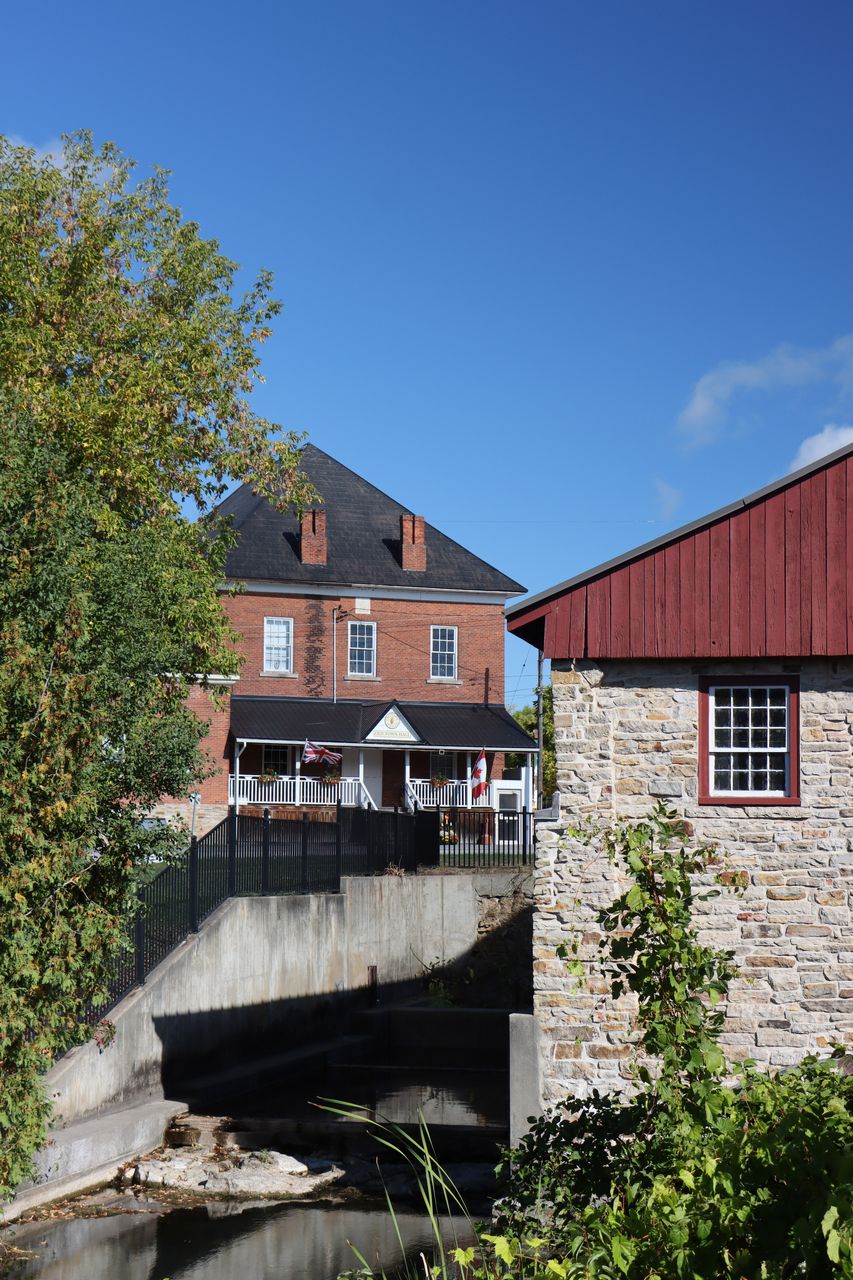
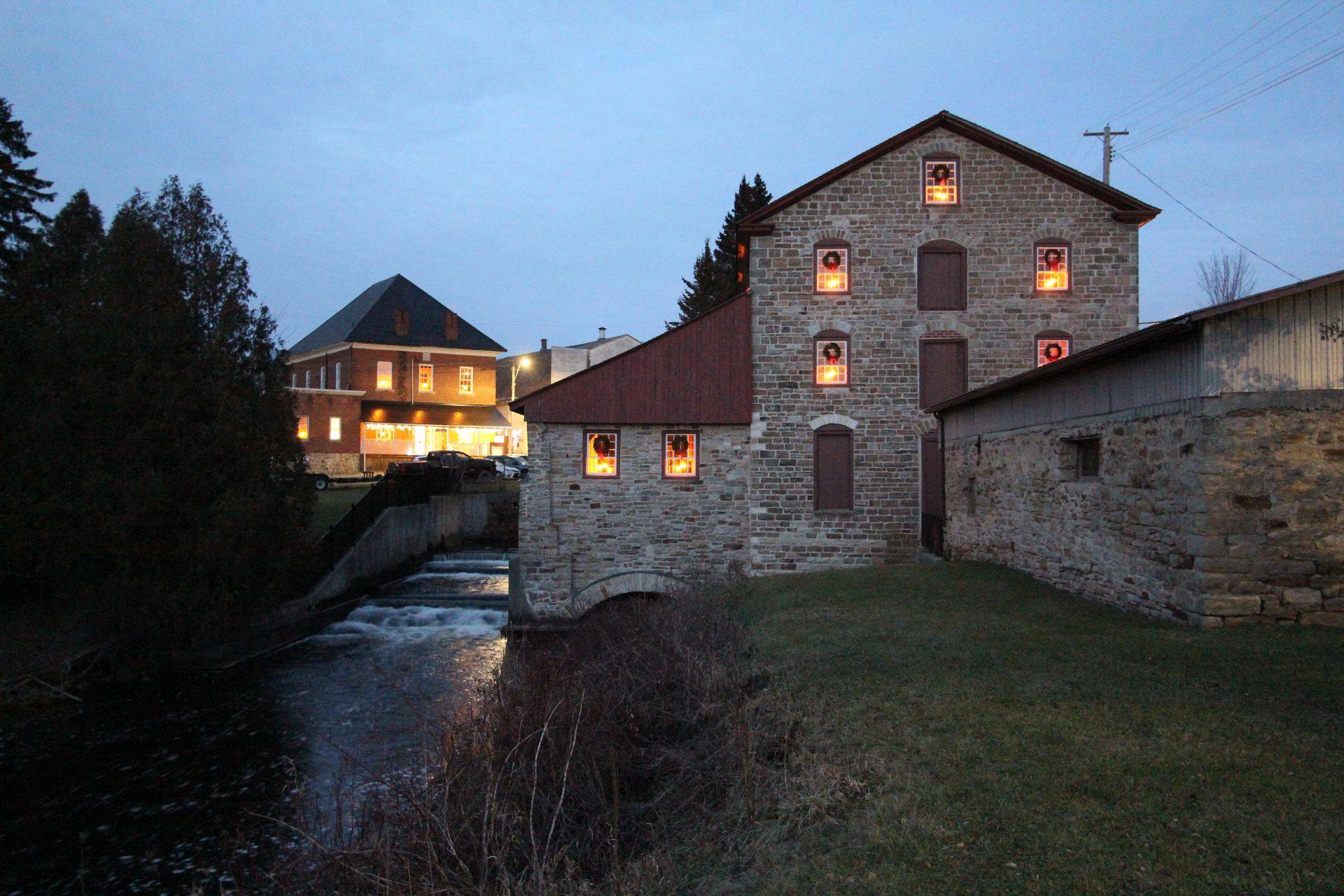
Plate XVII · Fin.The Old Town Hall beside the Old Stone Mill — two heritage buildings, one village
For nearly a century and a half, the Old Town Hall has witnessed the story of Delta unfold — from court proceedings and community dances to fires, restorations, and celebrations.
It survives not only because it was built well, but because generations of people chose to protect it.
The hall remains a living symbol of Delta's resilience, memory, and community spirit.